

For those of us working in screen and audio, 2025 has been a bit of a rollercoaster and it looks like 2026 is shaping up to be more of the same. As the BBC prepares for the Charter Review, creatives will also be debating AI and the growth of vertical, digital first strategies and the rise of the podcast as a live event.
Heidi Dawson, BBC Head of North of England, Controller, BBC Radio 5 Live
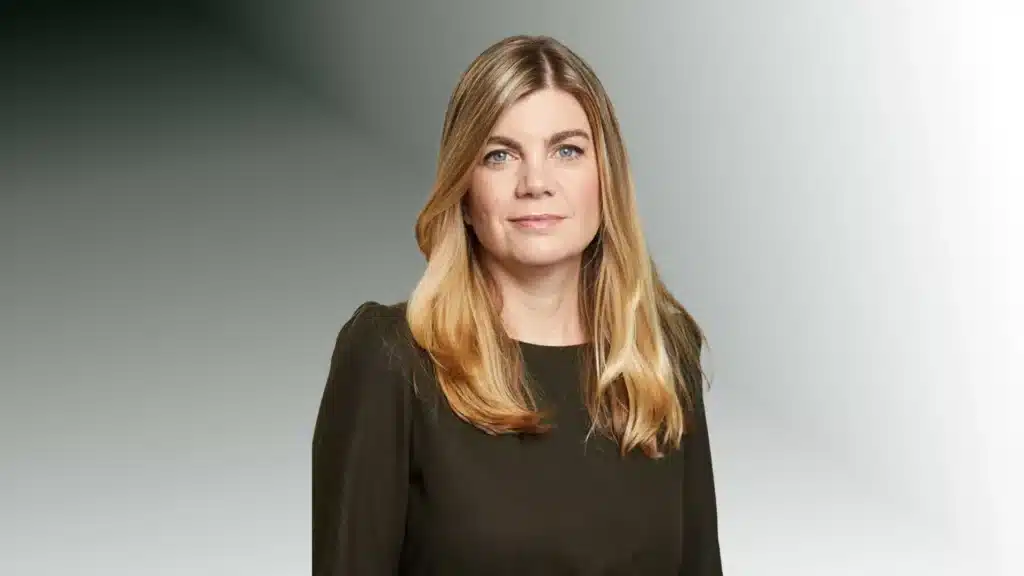
2026 will be an important year for the BBC, with Charter review helping to shape not just our future but the wider landscape of UK public service broadcasting.
The Royal Charter gives the BBC its right to exist and operate, setting out its mission and public purposes.
Under the current system, the Charter typically runs for an approximately ten-year period before coming up for review. The current Charter began on 1 January 2017 and comes to an end on 31 December 2027.
The Charter isn’t just about the future of the BBC. It will help shape the UK’s wider media landscape for the next decade and beyond. So much about our industry has changed since the last Charter review, and that pace of change is only set to accelerate as we look ahead to the next decade.
It’s an opportunity for the public and the industry to have their say and we would encourage everyone across the creative sector to respond to the UK Government’s Green Paper, which marks the formal start of the process.
A big part of the Charter will be how we’re delivering for audiences across the UK. We are always looking at what more we can do to support the growth of our creative industries in the Nations and Regions and be more responsive to what our audiences value.
We want everyone from across the UK to find outstanding value in the BBC as a universal public service for generations to come, and the views of everyone from industry leaders to local communities will help us to achieve us.
I have recently taken up an expanded role as Head of the North of England to build on the strong foundations the BBC has established in Salford and the wider North and I look forward to taking this work further next year.
When it comes to what to expect on screen and on the airwaves, we have some brilliant moments to showcase the very best storytelling from across the UK and bring people together in 2026.
It all starts on New Year’s Day with twists, turns and treachery in the fourth series of The Traitors and the much-anticipated return of The Night Manager.
As Controller of 5 Live, I have to mention how big next year will be for sport. 2026 kicks off with the Winter Olympics, excitement around next year’s Men’s World Cup is already building, and Wimbledon is always a highlight in the BBC’s calendar.
Radio 1’s Big Weekend will take over Sunderland in May, and we have even more exciting BBC music events and content for 2026 still to be revealed, so keep an eye out.
The BBC belongs to its audiences, and 2026 will be a celebration of stories that bring us all together.
John Whittle, Managing Director Lime Pictures

The importance of regional voices and storytelling has shone through the media landscape in 2025. Exceptional programming such as Adolescence, with its deserved success, has proven that social issue storytelling, deeply drawn characters, exceptional writing, bold directing and stirring performance are universal draws.
Lime Pictures produced fantasy family animation Wolf King (with partners Jellyfish Pictures, Assemblage Entertainment, Brain Audio and Dock10) with Ceallach Spellman, a UK northern voiced lead, hailing from Manchester, which was Daytime Emmy nominated. We hope to have added to championing the talent in our region by also reigniting a fire to revisit Brookside, a continuing drama that unearthed some of the greatest ever Liverpudlian talent.
Our home city continues to be incredibly desirable as a film location, as discussed at Sir Phil Redmond’s ‘Is TV for the Working Class?’ sessions at Manchester Metropolitan University – the question now is, how we can also showcase our own cityscape and utilise our regional crews, bringing the investment back into our region and giving a step up for new and emerging on and off-screen talent?
One trend that will continue in 2026 will be the importance of digital first strategy as part of the development pitching process for new ideas. Lime knows the importance of audience engagement, used effectively to support Hollyoaks through its 30th celebration including the 4Studio commissioned, visualised podcast for E4 and multi-platforms, ‘Hollyoaks Unwrapped’.
For linear TV to retain or grow its younger audience, companies and broadcasters can benefit from engaging with this audience with exciting shoulder content that will bring viewers back to the programme. Production companies must think creatively about how to offer this as additional value.
There has been a massive reaction to the growth of the Vertical Drama industry over the past few years with the conversation shifting to the UK in late 2025 it will be interesting to see that evolve and where the concessions are made to preserve quality. There is real opportunity for TV Production & Digital companies who already understand how to tell compelling stories at pace.
To conclude we ended the year with optimism, opening L16 Studios, that was home to upcoming CBBC show Girl Troop Vs Aliens and celebrating Hollyoaks’ 30th Anniversary and the return of Brookside while seeing accolades for Wolf King and an exciting kids and family development slate.
We didn’t know that all of this was on the cards in January 2025 so I hope for the same mix of both stability and box fresh creative challenges in 2026.
Jonathan Harley, Head of Production Development at dock10

If I had to bet on what’s coming next, it’s this: creator culture and traditional TV aren’t colliding, they’re merging. Not as a takeover and not as a gimmick, but as the natural evolution of how people make and watch things.
We’re already seeing formats designed as ecosystems rather than episodes, where a flagship show sits alongside podcasts, visual diaries, live streams and community moments that keep audiences engaged between broadcasts. Those “shows between the shows” aren’t side projects anymore; they’re creative universes in their own right, often where experimentation happens fastest. It’s a two-way street. A podcast format, a creator-led diary or even a throwaway social clip can spark a fandom and travel across platforms. I don’t think we’re far off from a creator-driven idea becoming the next big Saturday-night hit. The ecosystem is that fluid now.
At BEYOND, the international creative-tech conference that returned to MediaCity for its second year, one theme dominated: participation. Everyone is wrestling with the same questions — how audiences take part rather than just watch, how creators and production teams collaborate, and how formats become ongoing experiences rather than fixed episodes. That shift, from episodic production to something closer to an always-on relationship, is arguably the biggest change facing the industry right now.
Increasingly, Manchester feels like one of the places where this thinking turns into action. MediaCity has something distinctive: proximity. You can record an intimate podcast in one studio, then walk a few steps to see a major entertainment show cut live in a gallery handling international feeds under real-time pressure. A creator can capture honesty in a bedroom; what they can’t replicate is the electricity of 500 people in the room when a vocalist on The Voice lifts the roof off, or the sharp timing of Lee Mack sparring with contestants on The 1% Club. That craft still earns its place.
Virtual studios, real-time engines and AI tools are making ideas achievable more economically and sustainably, and opening doors for diverse voices to experiment safely. But as AI-generated content floods feeds, audiences are craving authenticity: liveness, risk, real human stakes. Technology works best here as an amplifier, not a substitute.
If regions limit themselves to being “places to shoot”, the next generation of creative value — formats, tools, IP — will consolidate elsewhere. The opportunity now is to think in terms of ecosystems: shared spaces for experimentation, development pathways for creators and indies, and clusters where ideas move fluidly between audio, broadcast, virtual production and live events. MediaCity was built for that. It’s where big shows, companion podcasts, spin-off experiments and the thing you’re not ready to talk about yet can all happen within the same square mile.
The next era of entertainment will be more connected, participatory and democratic. And right now, Manchester — and MediaCity especially — feels like one of the places where that future is closest. And that, for me, is what’s genuinely exciting.
Rufus Radcliffe, CEO STV

I think most of the media industry would acknowledge that the past few years have been challenging, with a tough advertising market and fewer programme commissions around for production companies. We’re not immune to these pressures but have adapted quickly to ensure we’ve delivered a brilliant schedule for audiences and advertisers, and by coming up with exciting ideas to help win commissions across our production business. We’ve focused on being bold, balanced and resilient, and we’ll continue this approach into 2026 – where there is much to look forward to.
Growth will continue to be at the heart of our strategy to drive revenues, alongside the delivery of our Public Service Media commitments. This includes our popular and trusted regional news service which we must make sustainable in response to rapidly changing viewing habits, a challenge facing all public service media companies. And with 2026 a big year for Scottish politics, our news and current affairs team is already gearing up to bring viewers all-important election coverage across the country.
One of the most exciting opportunities on the horizon is the FIFA World Cup, which promises to be a major moment for audiences and advertisers. Bringing the nation together for shared moments is one of the things we do best on STV and our streamer, STV Player, and this promises to be an epic competition – where hopefully viewers, Scottish businesses and the Men’s national team will all be winners!
We’re also launching STV Radio – our new nationwide station – at the start of 2026 and we can’t wait to get on air. Over half of the population of Scotland listen to local commercial radio and we think we’ve got an exciting proposition for listeners and advertisers up and down the country.
STV reaches almost 3m Scottish adults each month with some of the most popular shows around. In addition to the biggies like I’m A Celebrity…, Coronation Street and 9pm dramas, we’ve also brought shows like Brookside and Byker Grove back to life and they’re racking up the views. Our production company, which makes shows for broadcasters and global streamers, provides regular employment for the creative industry across Scotland with shows like Game of Wool, Antiques Road Trip, The Hit List and Bridge of Lies – to name just a few, and we’re selling shows across the world. We’re incredibly proud of what we do, and we have a clear strategy in place to ensure our continued contribution to Scotland’s creative economy.
Giuliano Papadia – Managing Director & Producer, New Page Entertainment (Cheshire) and former Director Non Linear Programme EMEA, Fox Networks Group

Television is on the verge of a radical format shift… again. First came colour, then Satellite, then the Streamers, all fighting to monopolise the viewer’s attention. But as we look towards 2026, the battleground is shifting to a territory that is vast, lucrative, and, creatively speaking, still in its infancy.
The numbers behind this shift are undeniable. While China’s domestic market is already a giant, the real headline for us is the explosion occurring elsewhere. The global vertical drama market outside of China is projected to hit $9.5 billion by 2030. The US sector alone is on track to reach $3.8 billion, proving that this is not just an Asian phenomenon, but a format that Western audiences are actively paying for.
Yet, while the financial model is maturing fast, the content itself remains a “wild west.” The current landscape is dominated by volume over value, formulaic melodramas often produced on conveyor belts. This is where the true opportunity lies for the UK. We are not just looking to service this market; we have the chance to elevate it. The sector is crying out for the one thing Britain has always exported best: world-class storytelling and premium production values.
For a UK creative sector bruised by funding squeezes, this isn’t just a lifeboat; it is a blank canvas. The market is currently dominated by the “fast food” of content, but in 2026, we have the potential to introduce the “fine dining.” By applying our rigorous scripting, high-end acting talent, and cinematic craft to the vertical screen, we can graduate this format from a guilty pleasure into a ……higher quality guilty pleasure. The British creative sector has always excelled when formats were young and rules unwritten. From global reality juggernauts to some of the most exportable scripted series in television history, the UK has repeatedly shaped new genres rather than chased them. Vertical drama offers a similar blank canvas — but it demands a willingness to rethink everything from narrative rhythm to production workflow. This is a medium built for an audience that has never learned to give one story their undivided attention for an hour, but will happily give it 80 micro-moments across a day.
Based in the UK, our goal for the coming year is to seize this opening. We see a future where vertical drama isn’t just about churning out content for foreign apps, but about creating British IP that commands attention. The audience has shifted to the split-attention economy, giving us eighty micro-moments of focus rather than one long hour, and the question for 2026 is whether we are brave enough to meet them there with quality, not just volume.
If British creativity has always thrived by reinventing the medium, 2026 offers us a rare chance to define a new one. The vertical screen is already in everyone’s pocket; now it’s up to us to put something worth watching on it.
Let the scroll continue….
Stuart Morgan – Managing Director, Audio Always

This year felt like the year that podcasting stepped up. After a decade of speedy growth, podcasting solidified itself in 2025 as a truly omnichannel media platform. At Audio Always we have seen huge success with live podcasting events, visual podcasts and a social media first podcast content strategy.
Next year that trend will continue – our podcast Help I Sexted My Boss is embarking on a UK arena-wide tour starting in March, which is proof that podcasts have become a universal entertainment media channel. In 2026, visual podcasting will grow from strength-to-strength, and at Audio Always we are investing heavily, with new studios in Salford and London, and a larger video team. When it comes to sponsorship and advertising, we’re starting to see video platforms better align with podcast platforms, so creators are able to earn fairly for their output on video podcasts, and brands will be able to take advantage of this joined up media strategy.
We’re seeing more and more creators come into podcasting through a passion project, and we know audiences respond to podcasts created with chemistry and integrity. Thankfully, the days of certain celebrities creating a podcast because they like the idea of a podcast rather than the content are almost over. We have some exciting podcasts launching next year hosted by broadcasters, journalists and content creators that want to connect and educate with their audience on a more intimate level – back to the reasons most of us fell in love with podcasting in the first place.
Remember the days of listening to worn out cassette tapes and scratched CDs on family car journeys? Away from video, we reckon 2026 will be an exciting year for digital audio aimed at children and families. Companies like tonies and Yoto have been leading the way over the past decade in developing content that kids can enjoy away from screens, and next year that concept will hopefully develop into ongoing, relevant daily content for the younger generations.
Professor Andy Miah, MediaCity Immersive Technologies Innovation Hub, Chair of Science Communication & Future Media, University of Salford, Manchester

In 2026, the media landscape will be increasingly defined by the convergence of AI-mediated consumption, companion AI, AI memory, immersive experiences, gamification, and AI-enabled co-creation, fundamentally reshaping audience expectations and disrupting traditional media hierarchies. These changes signal a new way of delivering content and a new kind of digital experience—one in which audiences expect an even more active role in shaping their lives in screens, using AI tools to produce, edit, and personalise content that feels meaningful and consequential.
AI-enabled editing and co-creation platforms allow viewers to remix highlights, generate alternative narratives, localise content, and interact with AI personas and companions in immersive environments. Gamification amplifies this agency, enabling users to earn recognition, track influence, and see their contributions reflected across social or virtual platforms. Whether through XR experiences or AI-driven narrative guidance, audiences now expect participatory, adaptive, and consequential media—content that allows them to feel their creative contributions can shape culture, conversation, and even public perception.
Recent media examples underscore these transformations. In October 2025, Channel 4’s Dispatches experimented with an AI-generated presenter in ‘Will AI Take My Job?’, signalling how synthetic personas are increasingly accepted by mainstream audiences. Meanwhile, the Suno legal case in which Warner Music Group made a deal to work with the platform highlighted both the generative power of AI and the disruptive outcomes around intellectual property in creative AI. These cases show that AI creations are no longer peripheral curiosities—they are entering mainstream media experiences that audiences value.
A pivotal showcase of next-generation media technology will occur at the Milan Cortina 2026 Olympic Winter Games in February 2026. Here, broadcasters and technology partners are set to integrate AI-driven personalisation, immersive XR viewing, companion AI assistants, and real-time interactive analytics to deliver sport experiences tailored to individual spectators. Audiences will be able to access AI-curated highlights, explore multiple camera angles, engage with AI commentators, and remix content for social sharing—demonstrating the real-time potential of participatory, gamified, and AI-mediated media at a global scale.
For professional media workers, these developments demand a radical rethink of their role and authority. Traditional hierarchies, grounded in control of production and distribution, are giving way to systems where influence resides with those who design and govern AI-mediated experiences. Success will require mastering AI system design, ethical oversight, and experience architecture, enabling professionals to guide AI memory, persona behaviour, immersive interactions, and gamified participation. Crucially, media professionals must create frameworks that empower audiences to contribute content meaningfully, ensuring participation is ethical, culturally coherent, and impactful.
Looking ahead, despite these disruptive times, there is a strong reason for optimism. AI is not a replacement for human creativity but a catalyst for a new, hybrid form of creativity, and we are still scratching the surface of what this could become. By combining human intuition, cultural insight, and ethical judgement with AI’s capacity for rapid iteration, memory, and adaptive generation, creators can explore ideas, formats, and narratives that were previously impossible.
This hybrid intelligence model enables collaborative storytelling between humans and AI, immersive experiences that respond to individual and collective audiences, and media ecosystems where creativity is participatory, dynamic, and inclusive. Far from diminishing human agency, AI promises to expand the frontiers of imagination, ushering in an era in which professional media practitioners and audiences co-create, innovate, and shape the cultural landscape together.
In 2025, there were several major transformations that will shape the next decade of media culture. In April, the Trump administration declared that AI would be taught from the earliest years of education, just as the big tech AI firms around the world sought to embed their products into world economies.
Relatedly, in November, the UK Government published its national curriculum review, which locates media literacy at the heart of all levels of education. This move signals a desire to respond to the growing challenge of nurturing resilience among young populations while ensuring their ability to develop advanced digital skills. Yet, in contrast, in December, Australia banned social media for under 16s and there is a wider banning of mobile phones in schools taking place around the world.
Taken together, these developments should be a wake up call for the media industry to recognise its important role in shaping, not only the next generation, but the adult enablers who can ensure that digital lifestyles are in support of resilient, thoughtful, critical, and creative young people. When Sir Tim Berners Lee published the World Wide Web and declared that “This is for everyone’, little did he know that ‘this’ meant, not only the web itself and the capacity to share, own, and author directly, but that the entire future of the creative process which would become increasingly democratised as a result of deeper transformations happening around creative computing.
While these times are not without their challenges, 2026 will take us further into realising the powerful potential of creative AI to enrich and extend humanity talking us further in how we think about profound matters, from our economy to our evolution.