

Cranes, steel and shipbuilding have long shaped Hartlepool’s skyline, a small coastal port town in the North East.
But today, tucked away in a modest office not far from where those heavy industries once thrived and have since diversified, a new type of workshop is quietly taking shape overlooking Hartlepool Marina. Not to the clang of machinery, but to the steady tap and click of keyboards and mice.
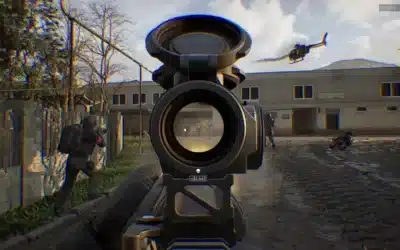
At the heart of it all is Tanglewood Games, a games development studio that has since grown from a freelance solo venture in 2017 into a team of 40 now working on major Unreal Engine titles, such as Hogwarts Legacy.
READ MORE: Unveiling Prolific North’s deep dive series into the North’s creative industries
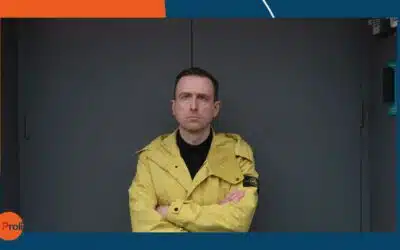
Hartlepool-born founder Chris Wood, alongside co-owner Terence Burns, spent decades programming for some of the world’s biggest games companies on high-profile ‘AAA’ titles. For Wood, that included a six-year stint at Epic Games working to build the Unreal Engine, the technology powering major titles such as Fortnite.
But, eventually, the long commutes soon wore thin. Despite a career that could have taken him anywhere as an Unreal Engine programmer, Wood was determined to build a games business in Hartlepool, raise his family in his hometown, and challenge the idea that it’s just another sleepy satellite town.
“There wasn’t a games industry in Hartlepool, but there never really has been,” he tells Prolific North.
“Hartlepool is a small town with an incredible history and amazing people, but it’s a town that’s been left behind as shipmaking, steelworks and that heavy industry around throughout the 20th century gradually went away,” he explains.
“There are lots of places like that, that are to some extent being left behind by the world becoming digital. I had a lightbulb moment that I could start my own company, and build it here, which is what we’re doing. This is our office now in Hartlepool,” he says proudly, pointing out to his surrounding office space.
Moving from the security of a full-time role to going freelance with no money, no equipment and no office, he was surprised at how quickly the work “immediately” became available.
“Being from a working-class background, and not having a financial safety net to fall back on, I’d always just worked for a salary,” he explains.
“The demand for what I could do immediately was enough to turn the lightbulb on and think: ‘Okay, yeah, I’m going to do this but as a company.’ So step by step, I’ve gradually built the business into something to employ people.”
While a big chunk of the staff at Tanglewood Games work remotely across the UK, a dozen staff regularly work from the Hartlepool office. Several have left the likes of Manchester or Yorkshire to join the company and move to the town, swapping city rents for affordable homes by the sea.
After one of the company’s first hires recently bought a house in the town, Wood beams as he recalls visiting their then newborn son: “I class him now as a Hartlepudlian as he was born here, everyone else is from elsewhere!”
It’s symbolic, as for decades, Hartlepool has watched some of its brightest young people leave for work in bigger cities. It might take time but now, he feels like the tide is beginning to turn.

“I’d like to fight for more attention on Hartlepool”
The company’s growth has been gradual but deliberate. Tanglewood Games is fully bootstrapped, instead focusing on providing deep technical expertise as a service to global studios.
“We’re not making our own games and gambling on selling them. I have massive respect for people who do that, but it’s extremely turbulent and difficult and you need funding to get through it.
“I was able to start a 100% service business. For all of our contracts, we sell our time on a monthly or daily rate as experts in what people need doing. So it’s something that lends itself to bootstrap.”
Tanglewood Games is positioned as “low-risk” in an industry often described as “turbulent,” with intense “ups and downs and cycles of boom and bust.”
The games studio also more recently has started working with Middlesbrough’s Double Eleven, a 400-strong indie games studio that has become “an incredible success story” in Tees Valley’s digital economy.
READ MORE: Government sets £31bn creative industries investment target
“Lee Hutchinson, one of the founders, is a good friend and a massive inspiration for me. What they’ve done and the way they’ve invested in Middlesbrough is really phenomenal. If I could replicate a small percentage of that and really grow a presence here and buy property, it would change the town.”
On the biggest challenges of running a games business and what changes he’d like to see from the UK government, he points to wider macro issues across the games industry. Yet he believes even “relatively modest” investment in Hartlepool could make a real difference – if the town isn’t overlooked.
“Hartlepool is the forgotten stepchild, almost, because so much funding falls on Middlesbrough and Stockton, as Hartlepool has a unitary authority and we have a funny mixture of jurisdictions.
“That’s one thing I’d like to fight for, to get more attention for Hartlepool and bring things here. That’s what I’m trying to do, just by doing it, rather than complaining about it. Let’s build something, then we’ll get the attention.
“I always talk about the town, it’s a big part of our identity as a company. I’m trying to seed the idea that Tanglewood Games is synonymous with Hartlepool.
“Investment in this town will have a disproportionately good effect on the place and the people. But I’m not an investor!”
READ MORE: Management buy Cheshire games studio out of administration
The challenge is how Hartlepool fits into the bigger picture. While the UK government’s Creative Industries Sector Plan recently identified the North East as a region where games are a strong asset that needs investment, the question remains how smaller towns like Hartlepool can share in that momentum.
As for the near future, Wood’s ambitions over the next few years are to expand the development team from 30 to 40.
“Out of our team of 40, 30 are devs. We can grow that team of 30 devs with the office, support staff and IT infrastructure we have. I’ve grown the dev team very carefully because of the industry turbulence, but “we’ve got everything in place, and the reputation in the industry to grow steadily. Quality is important.”
Beyond staff growth, he teases a much bigger goal to “completely transform” the way external development works in the games industry worldwide.
“Big game developers are shrinking their headcounts and moving more things external. I think it’s part of the process of the games industry maturing, going through a difficult kind of adolescence into a more established industry with specialist services all set up as their own companies. We need to move more towards that model.
“New studios of savvy people, who have been through probably several cycles of boom and bust and lost their jobs multiple times in the games industry, are now starting their own studios, determined to be more sustainable and more sensible about these decisions.
“At the end of the game, thousands of people won’t lose their jobs because you didn’t build up a 3,000-person studio to make this massive game, and then realise there isn’t enough work for them when it’s finished.”
It’s very much a future he sees Tanglewood Games playing a big part in.
“I think that’s the future with small companies collaborating in a more standardised and more efficient way, rather than building up these huge organisations that have thousands of people in the studio.”