

When your brand appears at the moment someone might be facing their worst day, how do you earn trust and build a connection before they ever need your help?
That question kicked off a session at Prolific North Live 2025 on 6 November at UA92 in Manchester, where Irwin Mitchell and Wavemaker revealed how real voices and authentic stories have the power to drive brand success.
Jonnie Norgate, head of brand and external comms at Irwin Mitchell, and Lisa Thompson, strategy and planning partner at Wavemaker, took to the Strategy Spotlight stage to reveal how they were able to create a meaningful brand in a sector defined by crisis.
“Imagine a world where you are working for a brand that provides a service people hope they’ll never need. Fewer than one percent of the population will use it in any given year,” Lisa Thompson told the room.
“We’re talking about personal injury and medical negligence. If you or a family member ever need to enlist the help of a solicitor like Irwin Mitchell, it’s because you’ve often been through a really traumatic or catastrophic event. With such a small percentage of the audience who will only ever need the service, you might ask: does brand building-even matter?”
The legal industry is typically seen as transactional and emotionally charged — not quite the stuff of creative brand campaigns.
But over the past decade, Wavemaker has analysed 1.1m consumer journeys across 175 categories and 40 countries, concluding that people don’t move neatly from awareness to purchase. They drop “in and out” of the marketing funnel — and what happens before the trigger moment is what really matters.
To dig deeper into that data, Wavemaker partnered with Oxford University’s Saïd Business School, uncovering insights that reshape long term brand-building.
The data showed that 84% of people choose brands they are “already biased towards”, long before they’re actively seeking a service.
Although it varies by category, the lowest priming bias within the data is 70% in any category, suggesting that priming is “even more important”.
“If you don’t have that priming bias or a strong year of branding, it makes it really hard for your brand to get great traction.”
That means when someone suddenly needs a lawyer, their decision is already made. And even in the world of personal injury and medical negligence, brand-building still matters — it just needs a different approach.
‘Influencers are becoming more important’

Coming from a consumer background before joining Irwin Mitchell around six months ago, Jonnie Norgate reflected on the challenge of repositioning a legacy law brand for a new era.
“How do you build brands when you need to be there at the trigger point? If you’ve never gone through a negligence experience, or if you’ve never had a personal injury, you’re never going to need to consider us. So when you do think about us, how do we come into that search journey?”
Although Irwin Mitchell’s services extend far beyond personal injury and medical negligence — from personal services such as wills and trusts to business services — the business knew it needed to rethink its channels beyond traditional TV.
Instead of turning to glossy advertising or polished testimonials, Irwin Mitchell and Wavemaker focused on what might have seemed an unlikely space for a law firm: influencers.
That decision followed recent IPA data, which discovered that influencer marketing now boasts the highest long-term multiplier across all media channels at 3.35.
“Influencers have become 25% more influential on the purchase journey,” said Thompson. “In 2018, influencers weren’t necessarily something we talked about in the media world. We’ve got to recognise that they, and mentions from social media, are becoming more important with the rise of AI.”
People looking for legal services search for recommendations as “they want to know that a brand is trusted”.
The results
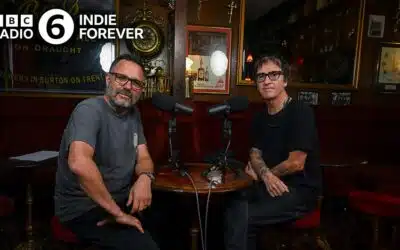
Working with disability consultancy Purple Goat, the team approached the influencer strategy with “sensitivity”. They paired real clients with influencers who shared similar experiences or disabilities for filmed, sit down conversations.
From working with Jake Brown, a previous winner from The Traitors who has cerebral palsy, to Paralympian Amy Conroy, who had her left leg amputated following childhood cancer, the campaign struck a chord for its authenticity. Viewers praised it for its honesty, empathy, and representation.
For a category not typically known for its emotional engagement, the results were striking: an 8–10 point rise in brand preference and brand love.
“We get this experience where influencers and clients tell their own versions of their story — it’s not us telling it,” said Norgate. “That authenticity drive is huge for us. We’re learning a lot quite quickly.
“Our goal is to think about how we can continue to tell these stories through other teams and parts of the business. We need to continue the difficult conversations and can’t shy away from them. The goal, from a brand perspective, is to reinforce that people remain at the heart of our work and stories. I don’t have a story to tell if we don’t have clients and that kind of relationship.”
Key takeaways
Thompson wrapped up the talk with three clear takeaways for marketers working in complex categories:
- Prime audiences early across all categories, before urgency clouds decision-making.
- Embrace authentic stories. It can be “more satisfying” to lean into “difficult moments” as authenticity is a “big driver in what makes people pick a brand,
- Collaborate with experts, don’t just talk about it, speak to real experts who can help navigate difficult conversations.
At an event dominated by the latest trends as marketers chase the next big thing, Wavemaker and Irwin Mitchell’s message cut through for its simplicity, revealing that real people and authentic stories still matter.