

Following the recent news that Edinburgh TV Festival is relocating to Manchester from 2027, it’s fair to say much of the reaction has focused on ‘disappointment’ or what Scotland stands to lose.
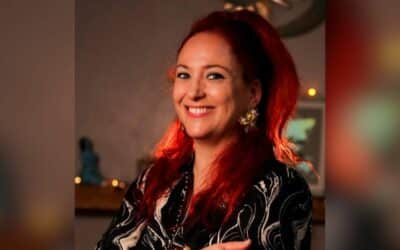
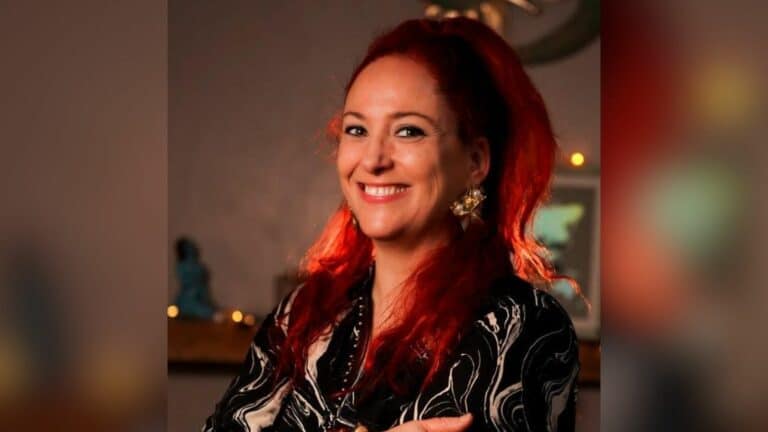
But Maureen Hascoet, director of production company Firewalker Pictures, would rather talk about what comes next.
She’s now gearing up to launch ‘Scotflix’, a new streaming platform designed to showcase Scottish stories while giving creatives more control over their audiences, IP and revenue.
Developed in partnership with content distribution infrastructure business Hiway, following an introduction from creative project matchmaking platform MySmash, the platform will become a ‘curated’ home for Scottish feature films, series, podcasts and vertical content.
But for Hascoet, Scotflix is about more than launching another streaming service. She believes Scotland has the creative talent and audiences but it lacks the infrastructure that allows creators to reach those audiences while retaining ownership of their work.
That’s where she hopes Scotflix will step in, plugging that gap by connecting Scottish creatives directly with viewers while keeping more of the value generated by their work in Scotland.
“I think there’s an opportunity for us to do it ourselves and debunk so many myths. When I go to London, I hear all the time: ‘You don’t really have the crew’ or ‘You don’t have the high-end TV experience’. All I say to that is: watch us. Of course we do! So I think the tide is turning and I’m hopeful it is going to empower local people,” Hascoet tells Prolific North.
As she gears up to officially launch Scotflix in September at the Scottish Screenwriters Festival, Hascoet says the platform has been shaped by what she describes as a “brutal” few months for Scotland’s screen sector, particularly in Glasgow.
“There has been the unexpected closure of the CCA, the Centre for Contemporary Arts. All the tenants at Trongate 103, mostly creative industries tenants including GMAC – the only accessible filmmaking workshop – all of a sudden saw their rents increase. It was like the equivalent of an eviction notice.”
Hascoet also led efforts to save Dumbarton Studios, home to BBC Scotland’s River City for more than two decades until the soap was axed. But despite widespread support for the campaign, the site was ultimately sold to a property developer.
But she hasn’t let that setback derail the mission she first shared with me in a chat last year to ‘preserve’ Scotland’s film and TV sector.
“It feels like we’re bleeding assets and resources. With everything that I do, I always think there is an opportunity to then consolidate what we do have. And what we do have is a really strong grassroots movement,” she explains.
As an example, she points to Claire Duffy’s Glasgow Telly Festival, which has encouraged creatives not to wait for commissioners but to get ideas made, however small, and build from there.
“I think it’s also symptomatic of an industry that’s changing, where there is a sense that to be legitimate in this industry you need to be chosen.
“Chosen for a commission, chosen for a scheme — so the power is always outside of your hands. But with the change in technology, and the rise of vertical videos, it’s putting the power back into the hands of the content makers, the producers, the movers and shakers of the industry.”
READ MORE: ‘You’ll miss us when we’re gone’: River City boss reflects on the show’s impact
Rather than relying solely on broadcasters and commissioners, she wants Scotflix to become a direct route between Scottish creatives, stories and audiences.
“We’re developing a platform that will host features, series, podcasts, verticals for anyone interested in Scotland-related stories. It will almost be a ‘one-stop’ shop.
“Scotland as a brand almost sells itself, right? We know it sells to North America, some parts of Africa and Asia. We always say ‘together we rise’, but I think the industry in Scotland suffers so much from fragmentation.
“It never feels like there’s an overarching thought. But there is no shortage of audience for Scotland. There is a shortage of infrastructure and connection, so that will be another piece of the platform that I think will be game-changing.”
She also believes Scotland’s new Community Wealth Building law could help shift the conversation and support to local creative initiatives.
“In the next 18 months, every single local authority will have a legal remit to show the government what they’re going to do across all sectors to make sure that assets in Scotland, be it land or initiatives or businesses, are predominantly thinking about the local community and not favouring distant shareholders,” she explains.
“If I’d had that to rely on when I was leading the campaign to save Dumbarton, it would have been a very different conversation.
“I’m really hoping that we’re going to see more of our local initiatives being supported.”
And she’s hopeful Scotflix will become part of that wider push to keep more creative power within Scotland, with the belief the platform can play a role in boosting Scotland’s screen sector.