

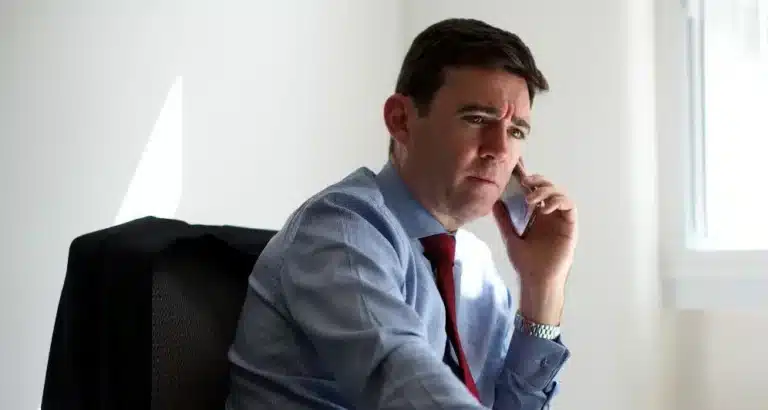

Speculation over Andy Burnham’s future has reached fever pitch as the Greater Manchester mayor used the run-up to Labour’s annual conference to float what many interpreted as a thinly veiled pitch for the party leadership.
In interviews with the Financial Times and the Guardian, Burnham has set out a left-leaning programme of higher taxes on the wealthy, mass nationalisation of utilities and £40bn of borrowing to build council homes. He confirmed that Labour MPs had contacted him “throughout the summer” urging him to run, adding pointedly: “I stood twice to be leader of the Labour party. And I think that tells you, doesn’t it?”
Burnham insisted he was not “plotting to get back” into Westminster and said the decision was ultimately for MPs, but his words have been interpreted in some quarters as an open challenge to Keir Starmer’s authority. Starmer’s allies accused him of stirring up trouble on the eve of conference, mocking his economic plans as reckless. One Downing Street colleague told the FT: “We are watching Andy — of course we know what he’s up to.”
The Greater Manchester mayor framed his pitch around control of everyday essentials. “When you’ve lost control of housing, energy, water, rail, buses, you’ve lost control of the basics of life,” he told the New Statesman. He argued that his programme could be funded partly by a 50p top rate of income tax, higher council tax on expensive homes in London and the South East, and a willingness to “get beyond this thing of being in hock to the bond markets.”
Burnham’s interventions come at a fraught moment for Labour. Starmer has endured a bruising few weeks, including ministerial resignations, a sustained lag behind Nigel Farage’s Reform UK in the polls, and rebellions over welfare policy. For some MPs, salvation lies north. One Labour insider told the Guardian that Burnham’s politics “are now firmly at the progressive heart of the Labour party,” while Liverpool city region mayor Steve Rotheram said his friend had been “made” by his years outside Westminster.

But if Burnham did make the leap, the consequences for Manchester would be immediate. He would have to resign as mayor in order to contest a parliamentary by-election, triggering a fresh election for under the rules governing combined authority mayors. That would create turbulence for a city region still bedding in its trailblazing devolution deal and the full roll-out of the Bee Network bus franchising system. Both have been Burnham’s signature achievements – a multi-year funding settlement with Whitehall and a unified, locally controlled transport system – but a new mayor could shift priorities or slow the pace of reform. It could also open the door for Reform.
For allies, that is precisely why a Burnham premiership could be transformative for the North. His track record on devolution, his willingness to wrest control of transport from private operators and his focus on place-based policy suggest he would champion stronger powers for city regions if he ever made it to No 10. Neal Lawson of the Compass thinktank told the Guardian Burnham now “feels comfortable in his own skin and beliefs. I think that’s instantly attractive whether you’re on the left or the right.”
Yet others warn that the economic turbulence his programme risks could hurt the very investment northern regions need. Starmer loyalists privately argue his borrow-to-build agenda would alarm markets and undermine Labour’s hard-won fiscal credibility, according to the Financial Times. And even if Burnham secures a parliamentary seat, his return would be subject to Labour’s tightly controlled candidate selection process — a reminder that the Westminster “machine” remains a formidable obstacle.
The “king of the North” has never hidden his ambition, and his friends say he is ready to run if the right opportunity arises. But for Manchester, his departure would open a new chapter of uncertainty just as the city region’s devolved powers are beginning to bear fruit. The question for Labour — and for the North — is whether a Burnham premiership would accelerate that journey, or stall it in the turbulence of a party civil war.