
Searches for business innovation have climbed 69% across Europe in the last quarter, showing just how vital creativity, technology, and fresh thinking have become.
While hubs like London and Paris are often seen as innovation frontrunners – fostering cutting-edge tech, sustainable solutions, and dynamic startup scenes – they’re not the only cities making bold moves.
With this in mind, Adobe Express set out to rank the most innovative cities across the UK and Europe, analysing key factors including university rankings, Wi-Fi speeds, and tech jobs per 100,000 people, to reveal the hotspots where innovation is thriving.
Probably unsurprisingly in the UK rankings, London took top spot, with another pair of Southern cities – intriguingly not Oxford or Cambridge, but rather Southampton and Bristol – rounding out the top three.
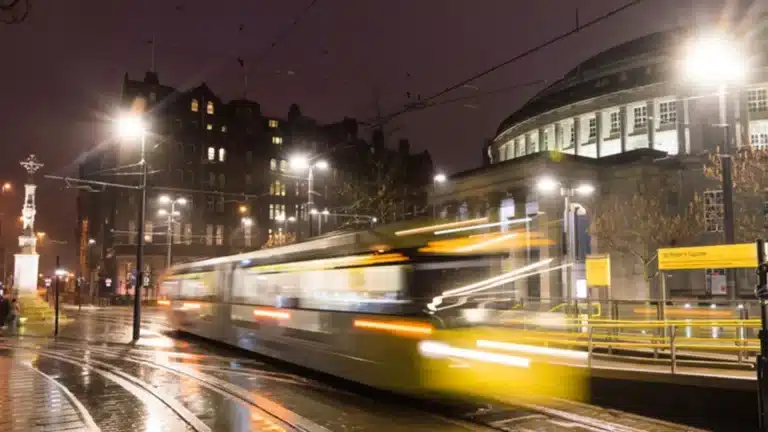
Manchester was the highest ranked Northern city at fourth, with an overall index score of 50.02. The city had the highest percentage of tech jobs in the rankings (187.9 per 100,000), the 34th best university in the world (University of Manchester), and a respectable, if not table topping, average Wi-Fi speed of 75 Mbps. The findings reflect the city’s reputation as a hotspot for digital innovation.
Also making the top 10 was the Scottish capital Edinburgh in seventh, with the highest-ranked global university outside London in the 27th-placed University of Edinburgh and an overall ranking of 41.32.
The Scottish capital was sandwiched between a double placing for Yorkshire cities, with Leeds taking sixth place, and Hull eighth.

Looking to European cities, Amsterdam, Zurich and Copenhagen took the top three spots, Dublin placed a respectable fifth, while the German and French capitals Berlin and Paris, were perhaps surprise under-performers, placing at ninth and eighth respectively, although both would still have placed in the UK top five with overall ranking scores of 56.36 and 57.73.
To achieve the rankings, five different factors were used. Once the data for the factors was collected, the factors were then normalised, to provide each factor with a score between 0 and 1. If data was not available, a score of 0 was given. The normalised values were then summed and multiplied, to give each city a total score out of 100. The cities were then ranked from highest to lowest, based on their total scores.