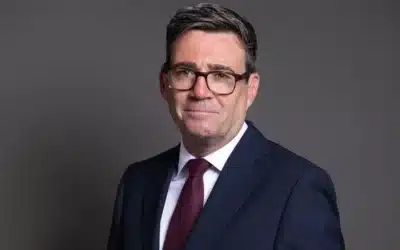


There were plenty of emotional moments as PM Andy Burnham gave his debut address as party leader (and PM) to the Labour Party Conference in Liverpool today.
There wasn’t too much of direct relevance to the tech or media sectors, although Burnham did namecheck the host city’s economic growth, reminisce over his own childhood in the city, and give a nod to major tech employer Kyndryl, the US tech infrastructure provider that revealed plans to create up to 1,000 AI-related jobs in Liverpool at its new North West tech hub by 2028 at the beginning of last year.
Elsewhere, while there may not have been too much industry-specific to dive into, there were plenty of big claims and promises that will affect us all, albeit not always with great detail about how they will be implemented, or paid for.
Key takeaways include:
An end to the pension triple lock and new National Care Service
The triple lock guarantees that the state pension goes up each year in line with either inflation, wage increases or 2.5% – whichever is the highest, and was introduced in 2010 by the Conservative-LibDem coalition. It’s seen as sacrosanct by many, despite its relative youth, but higher than predicted rises the annual cost of the total state pension, which is the largest benefit paid in the UK, has soared by £16bn in those years, to £154bn, according to the Institute for Fiscal Studies (IFS).
In its general election 2024 manifesto, Labour pledged to retain the triple lock for the state pension, and Burnham said today he would keep that promise, but that he would “adjust” it from 2030 – after the next scheduled general election so that the state pension will continue to rise every year in line with “prices” or 2.5%, effectively a double lock.
The PM also said the change would “generate significant savings” that would be used to fund his plans for a national care service, a subject close to Burnham’s heart after his dad died with Alzheimers recently after many years in care, which Burnham tearfully referenced on stage.
The IFS has noted that the savings generated will not be sufficient to fully fund such a service, with deputy director Jonathan Cribb describing the plan as “much improved but not perfect,” and Labour Deputy Leader Lucy Powell told the BBC after Burnham’s speech that costings have been done by the Treasury, which “will be published in due course.”
New relationship with the EU
It’s hard to believe that 10 years after the Brexit vote that was supposed to put all the Euro-wrangling to bed, we’re still banging on about it, with neither remainers nor hardcore leavers satisfied with the end result and the economy undeniably damaged by the decision to leave, but the leadership of the two main parties have been unusually silent ever since about what we might do about it.
Burnham took the unusual step of actually tackling the issue head on. He pulled no punches when he stated directly that “Brexit hasn’t given us control”, that we have “lost some of our control over immigration,” and that “Brexit has done more harm than good.”
He didn’t go quite as far as the commitment to putting rejoin in the next election manifesto, which some had predicted, but he did promise to use the upcoming EU-UK summit to to lay out “what I believe the different options are for Britain’s long-term relationship with our European partners.”
He added: “There are different options, and I will see if we can find consensus around one, which will give us clarity about our position and the future of the continent we live in.”
Repealing “Margaret Thatcher’s ideologic ban on public ownership of water companies”
Burnham described the water industry as a “symbol of what has gone wrong with Britain” in which “shareholders never lose and the public never win.”
He said Environment Secretary Angela Eagle will present a water bill to Parliament which will “repeal Margaret Thatcher’s ideologic ban on public ownership of water companies,” to much applause from delegates.
The PM said this will start a 10-year journey to a “very different water system” that will strengthen public control, giving mayors more powers to hold water companies to account and include “tougher consequences” for those who “repeatedly fail.”
Leasehold reform
Just last week Burnham announced plans for his Your First Home policy, which aims to make it more affordable for first time buyers to purchase a property. This week, he sought to win over those of us who already have a home, but in a flat (primarily, although some leasehold houses do exist), promising a bill before Christmas for “long overdue leasehold reform.”
“The days of you being squeezed for every penny are coming to an end,” he said, presumably referring to the thorny topic of doubling ground rents and service charge free-for-alls, and adding that the mistake over the last 40 years was not seeing housing as an “essential everyone needs for a good life.”
Secretary of State for Housing, Communities and Local Government Angela Rayner had actually already covered this earlier in the day, promising to end “the injustice of fleecehold,” by capping, then scrapping ground rent” and pledging to rein in “Unqualified, unlicensed and unregulated agents…taking thousands from their clients and mishandling their money with no transparency or accountability.”
All promising words, but successive governments have been talking about this for years. Indeed, Burnham’s predecessor Keir Starmer sought to address it in last year’s draft Commonhold and Leasehold Reform Bill, which most leaseholders concluded wouldn’t change much, so we’ll wait and see.
Great British Grid
Burnham announced plans for the Great British Grid, “a publicly owned company that will challenge the private sector operators” to drive down costs and speed up connections to the grid.
“The price of energy is crippling for businesses, and British bill payers pay some of the highest energy costs in Europe,” he said. “We have an energy system where prices are dictated in markets miles away, while families and businesses here shoulder the costs. Once again, the British public has lost control.”
The GB Grid plan builds on the party’s manifesto pledge to create Great British Energy, a state-owned company to invest in renewables and will will work with the private sector and network companies to increase competition in the sector, drive down costs and speed up delivery. That’s about as much as we know so far.
So all-in-all, a crowd pleasing affair, as you’d expect from a conference speech by a new PM who is still just about in his honeymoon phase, and certainly a more human and emotional performance than we’ve seen at a Labour (or Tory for that matter) conference for a while, as Burnham railed about hope, how great Britain can be and defeating fascism (bizarrely quite a sensitive subject to bring up in the current strange times, given recent events in the US, Europe and here in the UK) and teared up talking about his dad.
Plenty to keep an eye out for, and some genuinely promising pledges. We’ll just have to wait until next month’s budget to find out how it’s all going to be paid for, with the economy still not exactly on fire despite all the hope and greatness.