


Few in the agency world would argue that the environment right now is easy.
Economic uncertainty, policy pressures and rapid technological change are all reshaping how organisations operate. AI is accelerating workflows, in-house teams are expanding, and the pace of content production continues to intensify, according to insiders.
For many agencies, the challenge is not only navigating those pressures in real time but also redesigning how teams themselves are structured. To understand how that shift is playing out in practice, Prolific North spoke to several Northern agencies and marketing leaders about what they are seeing inside their own organisations and among their clients.
And while the pressures are certainly being felt, many say the disruption is also forcing the industry to rethink outdated structures and unlock new ways of working for the better – and the changes being seen could benefit strong Northern teams.
One of the changes appears to be a shift away from large departmental teams towards leaner senior cores supported by specialist networks.
Gary Bannister-Simm, co-founder of award-winning Preston video, motion and VFX studio adam+gary, has experienced that transition first hand. Before launching the business in 2023 he ran a team of more than 60 as Director of Video at THG Studios. Today his studio operates as a tightly focused two-person core supported by a trusted network of specialists.

“I’ve gone through quite a dramatic shift over the past three years or so, personally moving from an in-house team of 60+ to a hyper-focussed duo with adam+gary,” he said. “It seems we’re seeing a similar shift from big, departmental line-ups to small, senior cores with flexible specialist benches across the board.”
Rather than employing large permanent teams across every discipline, Gary believes many agencies are now building smaller groups of experienced operators capable of delivering most work internally before scaling around projects with specialist freelancers or technical collaborators.
READ MORE: The North’s spinout problem: innovation isn’t missing — scale is
“We stay lean with a senior ’specialist+generalist’ skillset where we can deliver 90% of our project completely in-house, then scale per project with trusted specialists,” he said.
Part of the reason for that shift, Gary believes, is the growing demand for always-on content.
Brands increasingly need to feed multiple digital channels with a constant stream of material, something that has accelerated the growth of in-house teams.
“For the sectors we work in, there’s been a definite shift to in-house,” Gary said. “As an external agency it’s impossible to try and keep up with an always-on, almost insatiable hunger for content across all platforms that in-house teams need to satisfy.”
But rather than pushing agencies out of the picture, the shift is often redefining where their expertise sits.
Jo Taylor, founder and director of purpose-driven brand, PR and marketing agency BrandXYZ, says clients increasingly want flexible access to senior expertise rather than large permanent agency teams.
“The agency world is changing because clients’ worlds have already changed,” she said. “Clients are beginning to look for a more dynamic approach from an agencies, one that’s more flexible and tailored to provide specialist support, that’s able to pivot quickly based on rapidly changing market demands or the volatility of budgets.”

Her agency has responded by developing what she describes as a “super-agency model”, assembling senior specialists around specific briefs.
“Instead of fitting client needs around the currently employed team, we hand-pick senior specialists with the precise experience needed for each brief,” she said.
“It means clients get deep expertise without the layers or extra overheads.”
Jo believes that shift is also moving agencies further up the value chain, with clients increasingly seeking help with governance frameworks, stakeholder engagement, strategy development and customer journey mapping.
For many Northern agency leaders, these structural shifts may actually play to the region’s strengths.
Industry veteran Rob Shaw, CEO of Leeds-based independent agency HUB, believes the changing market is once again highlighting the advantages of agile independent businesses.
“I think we are once again in an era where many independents are viable alternatives to the networks,” he said. “And clients and brands are recognising that.”
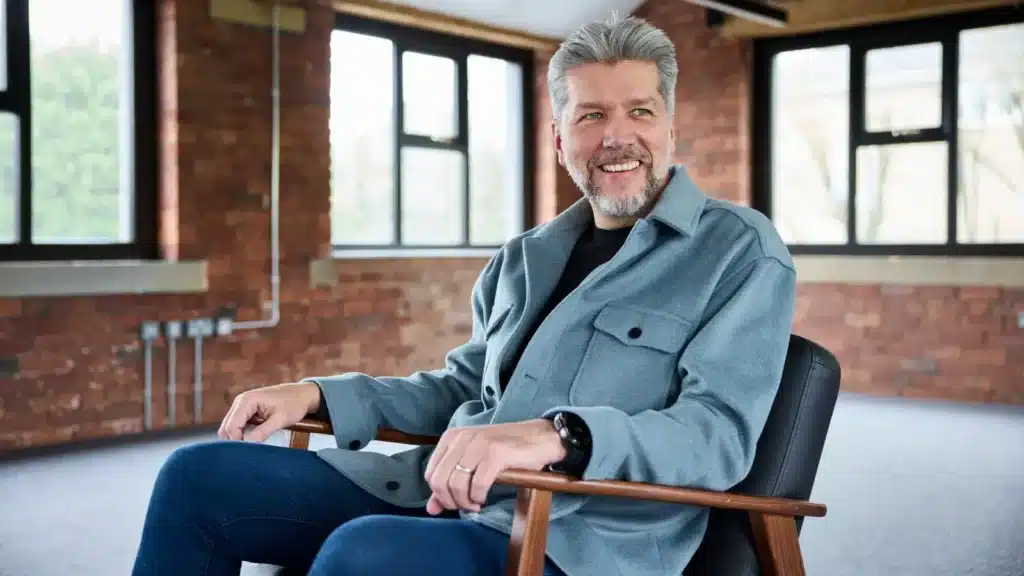
Shaw argues that many larger independent agencies now combine the operational capability required to handle major brands with the agility to move quickly.
“Some of the larger independents have the operating structures and processes in place to handle larger brands, but still have the agility to move quickly, which is important with so much change and evolution in the current marketing mix,” he said.
That agility is becoming increasingly important as client expectations evolve.
Miles Dagnall, from Edison Media, says brands are reassessing what they expect from agency partners following a turbulent period for large network groups.
“We are seeing a clear shift,” he said. “The drop-off across several large network agencies in 2025 changed behaviour.”
“What we are seeing now is clients questioning what they are paying for, having less patience for layered teams and slow turnaround, and showing more openness to working with indies on meaningful budgets.”
For Miles, speed is emerging as one of the defining advantages of leaner agencies.
“Speed is the biggest advantage,” he said. “Briefs are landing with days, not weeks, to respond. Planning happens fast. Decisions are made by the people doing the work. Changes can be made without multiple approval rounds.”
Relationships also play a central role. “Clients know who they are speaking to. Senior people stay involved. Accountability is clear when something does not work,” he said.
Alongside structural change, AI is clearly influencing how teams operate day-to-day.
Olly Moriarty, Creative Director at Manchester integrated communications agency Big Partnership, says the technology is already proving useful in the early stages of creative development.
“AI should be used post define stage, to help develop and give a wide range of creative / campaign concepts quickly, that helps with the planning and brainstorming,” he said.
“You can’t replace good creatives, but you can supercharge their work and make them more productive.”
The growing role of AI across agency workflows is reflected in wider industry research too.
A recent study by Prolific North, in collaboration with twisted loop and Mustard, found that nine in ten agency professionals are using AI tools in their work. However, only 2% say they feel “very prepared”, suggesting the industry is embracing the technology faster than it is building the structures and governance around it.
Some observers believe the deeper challenge is not the tools themselves but how organisations interpret the environment around them.
In a recent essay shared on LinkedIn, Matt Rhodes, Chief Strategy Officer at ELVIS, argued that many marketing organisations are introducing new technologies and adjusting workflows while leaving the deeper assumptions about how work is organised largely unchanged.
Writing in his Substack essay ‘Why organisations need to get better at making sense of the world’, Rhodes suggested many organisations still interpret marketing performance through frameworks shaped by an earlier media environment built around campaigns and channels.
As digital ecosystems become increasingly driven by continuous interaction, algorithmic distribution and real-time feedback loops, he argues that organisations may need to rethink how teams themselves are structured.
Across the Northern agency landscape, that rethink is already under way. Leaner teams, assembled specialist networks and AI-assisted workflows are gradually replacing the rigid organisational charts that once defined agency life.
What do you think? Get involved in the conversation by emailing us at [email protected]