Greater Manchester has hardly been short of attention in 2026 and there’s more than the usual buzz around the region. And with former mayor Andy Burnham now in the hot seat as Prime Minister, all that talk about shifting more power and investment into the regions suddenly feels a little closer to home.
Yet for a founder trying to fund the next stage of growth, a buzz around Manchester only gets you so far. The bigger question is where the investment is actually flowing.
That very question continues to run through Prolific North’s GRAFT Regional Tech Champions series, supported in Greater Manchester by MHA, GM Business Growth Hub and Vista Insurance.
And as we turn our attention to the investment landscape, there are plenty of reasons for optimism.
According to new data from market intelligence platform Tracxn shared with Prolific North, Greater Manchester tech companies had raised $241.6m, around £182m, across 25 disclosed equity funding rounds by 30 September 2026.
You don’t have to look far to see some of that activity in action, from fintech scale-up Ryft recently securing £20m for European and US expansion to AccessPay attracting a majority investment from Accel-KKR.
They are very different deals at very different stages, but both point to Manchester tech businesses attracting serious attention beyond the North.
So, is the investment market finally turning a corner? And if the money is there, which businesses are actually getting it?
Bigger cheques, a tougher crowd?
Richard Fallon knows the journey from both sides. He co-founded Manchester data intelligence firm Naimuri, which was snapped up by defence technology firm QinetiQ in 2020. Now chair of Manchester Angels, he helps other founders navigate the journey towards building something bigger.
And the picture at the earlier end of the market is perhaps more encouraging than some of the wider headlines suggest as he highlights how Manchester Angels has made around seven or eight investments annually during its first three years.
“I would say the quality of the businesses that we’re seeing is improving. We’re seeing things with more appetite, more ambition, more looking to make a global impact,” he explains.

Working closely with the likes of the University of Manchester Innovation Factory and investment firm Northern Gritstone has also brought more university spinouts into the mix. Fallon estimates they have accounted for at least a third of the network’s investments over the past two years.
But once a business has a product, customers and a few million pounds in turnover, the question changes. How does it turn that promising start into something operating on a much bigger scale?
Looking back on his own exit, Fallon believes he “could have done more” with Naimuri before selling.
“There haven’t been enough big exits in Manchester. If you spoke to me 10 years ago about what a big exit looked like, I would have thought ours at Naimuri was massive. Actually, it wasn’t that big, and we could have gone on more,” he says.
“The more businesses that exit, the more people will spin out from that with their own ideas. Everyone in our company walked away with a decent amount of money post-sale in stock options. It gives them the opportunity if they want to generate something too.”
While he says the region has the ideas, talent and increasingly ambitious founders, turning those ingredients into more substantial businesses and exits is where the harder work begins as “we’re not very good at scaling those ideas”.
And Fallon may yet have another go himself. After initially feeling burnt out following the sale of Naimuri, he says the “fog has started to lift a little bit” and that familiar founder itch has returned.
He has started building a new product, Arial IQ, designed to automate parts of the process of reducing the risks of introducing AI into an organisation. It is still early days, but he wants to establish whether there is enough there before he “really goes for it”.
For Ben Davies, marketing director at venture capital firm PXN Group, there are already signs of big success stories emerging across the region this year.
“It feels like Manchester is increasingly being seen as a destination for start-ups and scale-ups,” he says. “This ‘place brand’ not only shines a light on our homegrown companies, but is increasingly helping us win favour with scale-ups looking for somewhere to expand, often over cities we might previously have been second to.”
As homegrown businesses scale alongside international tech giants, that is also bringing more experienced people into the ecosystem.
Davies points to Street Group’s investment from Hg, valuing the business at more than £200m, and Summize’s recent funding round as examples of what Manchester can produce.
Summize’s co-founder and CEO, Tom Dunlop, says the company’s own journey kicked off not with investment, but proving that customers genuinely wanted what it was building.
“Early on, the biggest milestone was product-market fit. We weren’t just winning customers but seeing real adoption across entire businesses. After seeing legal, sales, procurement, and finance teams using the Summize Contract Lifecycle Management (CLM) platform without friction, it became clear we’d solved something meaningful.
“From there, it was about repeatability. We reached a point where we could consistently land, expand, and deliver value across different types of organizations. That’s what gave us the confidence to scale internationally, particularly into the US, where we’ve seen strong momentum.
“The recent $50m investment is another key milestone, but for me it’s less about the capital and more about validation. It reflects the belief that the category we’re in is evolving, and that solving adoption in legal tech is the real opportunity.”
Fewer deals, more selective investors
But behind those success stories, the funding market is changing. Davies from PXN Group points to a wider UK shift towards fewer, larger rounds. According to the British Business Bank’s latest Small Business Equity Tracker, the number of deals involving smaller businesses fell by 17% in 2025, while investment at growth stage saw a 10% boost. By contrast, seed-stage deal numbers fell by 27% and venture-stage deals by 13%.
READ MORE: North West equity investment jumps 82% despite fewer deals as investors back bigger bets
For Davies, that matters because today’s early-stage businesses are the pipeline for tomorrow’s scale-ups.
“This reflects the continued lack of liquidity in the European venture market, where fund managers have faced a tougher fundraising environment. It may also create challenges for the future early-stage pipeline, which fuels the later-stage market by spreading risk capital across a larger number of companies. EIS funding also remains well below its 2021/22 peak, and has historically been particularly important to the regional venture market.”
And despite larger average deal sizes, he says bigger Series A and B rounds, often in the £10m to £30m range, remain a “particular challenge”, with Manchester founders still “regularly” looking to London or overseas for those larger cheques.
But Davies believes there are signs the market is “turning a corner”.
“In the past 12 months, PXN has exited six businesses with combined valuations of more than £400m, while more than a quarter of our portfolio companies have received an acquisition offer,” he explains.
There have been some notable examples of that activity recently as Nasdaq-listed US giant NetApp has announced its intention to acquire Manchester AI storage specialist Peak: AIO, while PXN-backed cybersecurity firm Cytix recently announced a $7m Series A to accelerate its growth.
At investment firm Northern Gritstone, investment director Gareth Llewellyn describes 2026 as a “quieter year” for completed deals across the North West. But he argues the headline numbers do not necessarily tell the whole story.
One shift is in what is attracting money as Applied AI, where businesses use the technology to solve specific problems within industries, is drawing capital alongside continued activity across life sciences, health tech and medtech.
READ MORE: Where Greater Manchester’s tech growth is happening — and what’s driving it
And when it comes to deal volumes, Llewellyn suspects some activity has moved further down the funding chain into angel rounds, grants and accelerators, which may not always show up “cleanly” in venture capital datasets.
“If that is right, the front of the funnel may be healthier than the headline number suggests, and what we are really seeing is companies taking longer to reach an institutional round.”
What are investors actually looking for?
If capital is becoming more selective, what does it take to secure it? Dominic Horton, director at Vista Insurance working across private equity and M&A, says investor appetite is currently “strongest” at the lower to mid-market end, particularly for businesses at the £5m to £15m EBITDA stage “where there’s genuine competition for quality assets. Above that, buyers are more selective”.
He is also seeing businesses prepare much earlier for a potential exit.
“The other trend worth naming is exit readiness. Sponsors sitting on assets held longer than planned are starting preparation 12 to 18 months out rather than three months out, and insurance is increasingly part of that early workstream rather than a pure buyside consideration.”
His view of the wider deal market is more cautious. Horton says the number of tech deals across Manchester and the UK has “drastically reduced through 2026 as the impact of AI becomes more prominent”.
Investors are also looking beyond AI, now scrutinising what a business actually owns and how easily a competitor could replicate it.
But for Horton, one of the more revealing signs of Greater Manchester’s growing maturity is not simply how many deals are being done but who is interested in doing them.
“The clearest signal isn’t necessarily deal count, it’s who’s buying,” he explains.
“Manchester tech assets are attracting buyers from outside the region and outside the UK, and that only happens when the businesses stand up to institutional-grade diligence. Five years ago, a lot of them wouldn’t have. The second signal is that Manchester platforms have become acquirers rather than just targets. We’re doing more bolt-on work for North-West headquartered groups than we were, which points to businesses with the balance sheet and the governance to run a buy-and-build.
“The third is more mundane but tells us a lot: the quality of what we find in diligence has improved. Governance, contract discipline, data protection the basics are better than they were. There’s still a visible gap in later-stage growth capital, which pushes some businesses towards an exit earlier than they’d choose.”
A good product still needs a way in
For Samantha Fay, CEO of digital health business SiSU Health, finding the right investors started with a fairly fundamental problem: knowing where to start.
The business effectively began its fundraising process with “a blank sheet of paper”.
“We didn’t know anybody in the investment arena in the UK at all,” she explains. “We always had investment coming through other sources, but then we engaged with an adviser in the North to support us to navigate the investment landscape.”
Founded in Australia, SiSU spun out its UK business in 2023 and has since grown from three people to around 30.
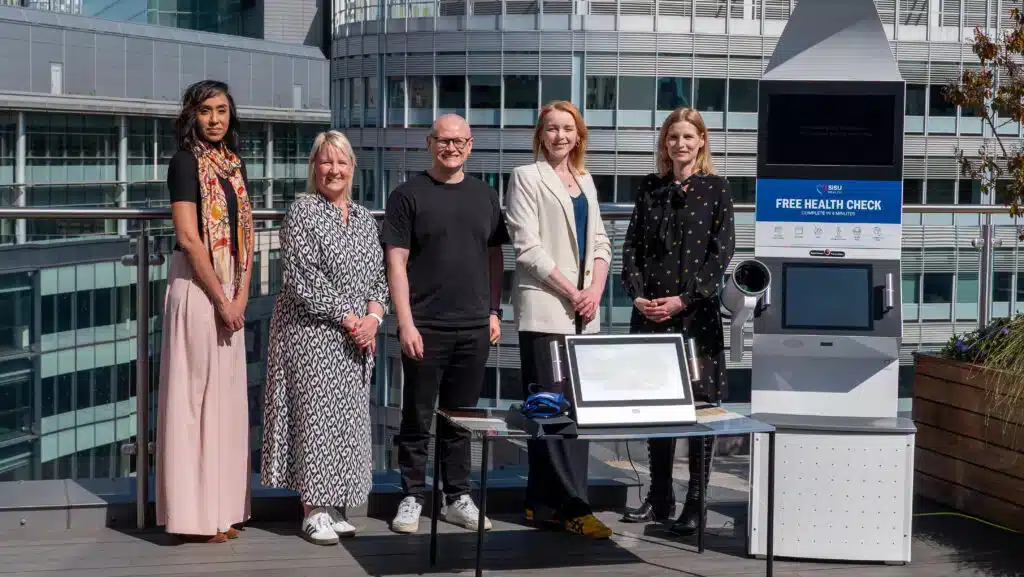
An adviser in the North helped the team shape its investment proposition and identify potential backers as Fay navigated a market where digital health had gone from a post-Covid “boom” to a pullback, just as AI businesses began attracting much of the attention.
“We were trying to ride those twists and turns. It is challenging and there is a core focus around London. I spent a lot of my time going to networking events and meeting people there – it does come with the territory. But many of my introductions into some of the Northern-based investment came through people I met in London.
“There is an assumption that people you meet in London are only focused on the South – but many of the investment offices do have new arms opening up in Manchester or across the North.”
SiSU subsequently announced a £1.25m round led by the GMC Life Sciences Fund by Praetura and NPIF II – Praetura Equity Finance.
Manchester remains a key hub for its logistics, software development and sales as the company works towards further European growth.
“It’s where we chose to put our primary hub, its where we have recruited a lot of our key talent. We see it as a region that gets lots of investment, lots of growth, has a really high appetite for innovation in our space – those things are all really important when you’re at our stage of scale up journey. We’ve had lots of support, whether that’s being introduced to investors, or advisors who can support and help companies like us.”
That need to help founders navigate an increasingly selective market is also playing out at GM Business Growth Hub.
The Access to Finance service helps Greater Manchester businesses secure the funding they need to start, grow and scale through fully funded, impartial support spanning financial planning, investment readiness and introductions to debt, equity and alternative finance providers.
The GM Business Growth Hub’s Digital, Creative and Technology team is seeing “strong early-stage demand”, but says investors are “selective and increasingly focused” on businesses able to demonstrate commercial traction, revenue growth and a clear route to scale.
Despite a more challenging national funding environment, they point to recent support for businesses including Fruga, Ecobelt and AMH Brands as evidence of continued investor interest in high-growth companies across the region.
Further along the funding journey, Andrew Feeke, partner at MHA, sees a similar picture: “uncertainty” remains particularly in the ‘tech’ market, but money is available for the right businesses.

“Investors are competing for the strongest opportunities through more competitive pricing and increasingly creative deal structures, often on a syndicated basis. Transactions are taking longer as buyers seek greater certainty, with deeper due diligence processes often involving multiple workstreams across financial, commercial and technology areas. Valuations continue to depend on factors such as business scale, revenue quality, cash generation and customer acquisition costs.”
For businesses considering their first private equity round, preparation is “key”. Feeke recommends beginning work with advisers 12 to 18 months before seeking investment, giving management teams time to prepare and build relationships.
And despite that greater scrutiny, MHA continues to receive “regular approaches” from private equity funds and specialist family offices across the UK and internationally which view Greater Manchester businesses as “highly attractive investment opportunities”.
“This level of interest reflects the continued strength and maturity of the region’s technology ecosystem reflecting Manchester’s collaborative business mentality and ‘can-do’ attitude. Alongside local and Northern-based investors, external capital is helping to create a healthy funding environment for businesses that are well prepared and ready for investment.”
Manchester roots, global capital
The question is not simply whether Manchester has enough investors of its own, but how effectively its businesses can connect with capital wherever it happens to be.
Andrew Wordsworth, co-founder and CEO of Sustainable Ventures, has been trying to tackle that challenge within climate tech.
Three years ago, he took his firm’s first investment round to expand across the UK, driven by a simple belief that the “best climate tech companies are not all based in central London”.

Now based in Manchester at Sister’s Renold Building, Sustainable Ventures brings workspace, investment and business support together under one roof.
Wordsworth says Manchester has “one of the highest proportions of climate scale-ups outside of London”, pointing to businesses including Kraken and Modern Milkman.
“Broadly speaking, two thirds of climate companies are based outside London or the M25, yet only get a third of the funding,” he explains.
Part of Sustainable Ventures’ mission is to make it easier for investors to find promising climate tech businesses emerging in Greater Manchester and other regional cities, including bringing investors into the region through events.
Research commissioned by innovation district Sister from Beauhurst earlier this year offers another glimpse at the scale of the opportunity. It found Manchester was home to 1,088 innovative businesses, with employment across those companies growing by 37% since 2019. Yet around 80% of venture capital still flows into London, Oxford and Cambridge.
For Dr Karim Bahou, head of innovation at Sister, closing that gap does not necessarily mean trying to recreate those ecosystems in Manchester.
Instead, he sees stronger connections with them as part of the answer. The Manchester-Cambridge partnership, for example, could bring complementary strengths together and help businesses grow faster.
He also wants industry involved earlier, helping young businesses understand genuine customer problems and build the evidence investors want to see.
Northern Gritstone makes a similar point, pushing back on the idea that a healthy Manchester ecosystem should be expected to provide every penny a growing company needs locally.
“The best founders should be seeking the best capital available anywhere in the world, not the closest capital available to them.”
And what happens after a successful deal can matter just as much. Fallon estimates around 60% of Manchester Angels’ members are exited founders, bringing with them experience of building companies, making difficult decisions and opening doors a first-time founder might not even know exist.
And for Bahou over at Sister, amid all the debate about what still needs fixing, it is worth remembering just how far Manchester has already come.
“Over the last 10 years, Manchester’s growth has averaged at 3.1%. The amount of growth, the amount of innovation happening here in Manchester, we should definitely shout from the rooftops about that.”