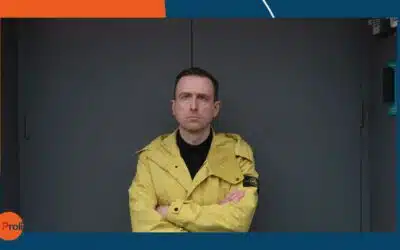


Ask Hannah Trigwell, head of marketing at fitness music app Pure Energy Music, about the power of music and her enthusiasm is contagious.
Born in Leeds, Trigwell went from busking on the streets to topping international charts and is now channelling that same passion into creating soundtracks that gets gym-goers moving.
Speaking to me from Tileyard North, Wakefield’s 135,000 sq ft hub for the creative industries, it’s clear why Pure Energy Music has made the reimagined mill its home. The corridors are ‘buzzing’ with creativity, from producers testing out beats to singers rehearsing behind studio doors.
READ MORE: Praetura-backed firm secures £1.5m to scale Huddersfield manufacturing tech
“It’s the first creative hub in this region. We have music studio facilities here, amazing event spaces, and a videography and photography studio downstairs,” Trigwell tells Prolific North.
“There’s lots of music producers here who have residencies, but also different companies that work alongside those producers, and that community has been really useful for us.
“There’s so much talent in terms of music here but also from the fitness experts that we work with. There are so many incredible, knowledgeable people here in the North.”
It is exactly the kind of creative bustle and tenant mix that Tileyard’s co-founder Nick Keynes envisioned when I first toured the Grade II-listed mill buildings more than two years ago, just after the redevelopment opened its doors.
For Trigwell, it’s a natural fit. But after busking on the streets of Briggate in Leeds over a decade ago, it’s a far cry from where she started.
From busker to chart-topping musician
Before starting a biology degree at the University of Leeds, Trigwell set herself a challenge: give it one year to ‘make it’ as a full-time musician, otherwise university would be the backup.
“I busked every day of the working week on the main strip of Briggate and it was brilliant. I met a lot of different musicians that way and built up a local fan base, which enabled me to start gigging locally.
“When the time came to start my degree, I didn’t feel confident enough to commit to music full-time. So I went to university as a backup plan and not long after I began, that’s when my music career started to take off after uploading videos of my performances to YouTube.”
YouTube became her launchpad and a way to ‘leapfrog’ beyond Briggate, opening the doors to international touring.
“I started touring across the UK, and then internationally through Europe and the Middle East. As my popularity on YouTube grew, I was lucky enough to score two number one singles in South East Asia, which was amazing, along with a string of top 10 hits worldwide through a mix of my original music and my takes on popular songs.”
READ MORE: Another Leeds agency takes the employee ownership route
After university, she turned music into a full-time career for 12 years, racking up over 400 million streams online.
“When I was a full-time independent musician, I always talked about diversification of income streams. So there was never just one thing going on, and that’s what enabled me to have such a long career and remain independent.”
From publishing her book Making It Happen: How to Create a Sustainable Career in the Music Industry, to earning royalties through streaming, tours, private live performances and even ghostwriting, she’s found ways to do it all but most of all, the sweet spot for sustaining a career in music.
How exactly did she find the time to keep on top of so many things? “I don’t know, I think I’ve got a problem!” she laughs.
But when Covid struck in 2020, it hit the music industry hard. Although she says she could have carried on as a full-time musician thanks to those income streams, she realised she “didn’t need the validation” anymore. So, she channelled her passion into launching a marketing agency called Back Pocket Club.
“I really enjoyed creating content, marketing and the end-to-end video production process,” she says. Her agency soon took on clients including Leeds United, Leeds Conservatoire, and Pure Energy Music.
As Pure Energy expanded, the perfect job opportunity opened up that combined marketing, tech, and an opportunity to help scale-up the business.
“It’s almost like a crystallisation of my love for music and marketing,” she explains, on why it was a no-brainer to join the company two years ago.
“With what I was doing in music, it was a very defined target audience, and I was making music for a specific type of listener, in a specific genre.
“It’s very interesting how you can draw comparisons between the two, because the music that we make here [at Pure Energy Music] and the way that we deliver it is for a specific purpose.
“The end user of the app is a fitness instructor, but the people really connecting with that music are gym members. So this journey of: what is the music for, who are we making it for, and then marketing it in a way that really resonates with them, it feels like a similar process to how I’ve always done it.”
The app behind the beats
Andy Pickles, who also operates Music Factory Recordings, first launched Pure Energy Music in 1992 as a CD subscription service for fitness instructors, before pivoting into music streaming in 2020.
With a team of 12 based at Tileyard North, Pure Energy Music is now ramping up its efforts to “revolutionise” the fitness music space.

“We are the ultimate fitness music app. The music that we make is in-house with our producers alongside fitness experts, and all of the music is briefed to fulfill a specific class or designed to support different group exercise classes,” she says.
“We empower instructors with music made for their class and deliver it through tech that enables operators to give a very consistent experience to their members.
“We have leading music producers, who are very good at what they do.”
So how exactly does it work? Pure Energy Music owns the global rights to all of its music, which is categorised by discipline, music type and genre. The app has been created for leisure centres, gym operators and fitness instructors, who subscribe to the service to access curated music.
“Instructors can find music that’s made for their class. There’s less searching for the right soundtrack for them, and more time spent on motivating their members.”
“There are other music apps out there but the main differentiator with us is that we focus on fitness, from conception of a song to the way it’s delivered.”
The “main issue” with gym operators or fitness instructors using music streaming platforms is that they are not licensed for commercial spaces.
Yet gym operators can create “exclusive channel groups” within the Pure Energy Music app, complete with videos that give instructors visual cues and guidance on how a workout should flow.
But it also “protects IP,” she explains. “So if someone like David Lloyd has a signature programme, they can train their instructors to deliver a class that’s exclusive to them.”
That level of exclusivity is something mainstream streaming platforms “can’t provide”.
“There’s no PRS or PPL [music licenses] to pay. That ends up reducing gym music costs by up to 90%, which is a really significant saving.”
The future
Earlier this year, Pure Energy secured £500,000 from Finance Yorkshire’s growth fund to fuel its expansion, including new hires across marketing and customer experience, plus subscription growth.
“We’ve just launched a web player, which is the browser version of our app, so instructors can use any device. We’re always expanding the music we have, so anybody can come onto the app and search for any type of genre and any type of class.”
READ MORE: Music to optimise your exercise performance? There’s an app for that
But the ultimate ambition is to continue “driving the sector forward” to optimise exercise performance.
“Sometimes people forget the value of music in the context of fitness, you can take it for granted. But if there was no music in a space when you’re trying to deliver a workout, it can mask fatigue and the right type of music will motivate.
“The wrong type will do the opposite. So we’re increasing awareness that music should be used as a strategic tool.”
Although Trigwell has stepped back from touring, she hasn’t left music behind.
“I’m not touring anymore, and I’m really enjoying not being on the road right now,” she says. “It’s been amazing to just focus on one project. When you’re touring, you might be working on an album at the same time, but you can’t fit it in with anything else you’re doing.”
She continues to record, write, and distribute tracks through Pure Energy Music, recently recording the vocals for seven tracks, all while helping the app to expand globally.
“I’m still writing songs and singing them. We’ve got a distribution deal with Warner, and through that, those tracks will appear on other DSPs [digital service providers] via Pure Energy Music. So there will be more music from me — but through Pure Energy Music!”