


“There isn’t a chance in hell I’d go back,” says Alice*, who recently walked away from a nine-year career behind the camera.
For her, leaving the TV industry wasn’t a choice, it was just the final straw after years spent trying to make an increasingly “unstable” system work.
Her experience captures how some freelancers across the North say they are being pushed out of an industry they once loved, as exhaustion, low pay and instability take their toll.
As part of Prolific North’s focus week examining the realities facing Northern freelancers, we revealed how increasing numbers are questioning their future in an industry they describe as being “in crisis”.
Today, we go deeper into some of those issues, the questions freelancers are starting to ask the UK government, and what they say urgently needs to change.
The moment things unravelled
From horse racing and football to assisting on soap dramas, Alice* built up an impressive career across factual and outside broadcast television. But she says the factual programming sector “fell flat” around two years ago, as mid-budget commissions “stopped”, competition intensified for work and rates became “stagnant”.
Looking back to when Covid hit the film and TV sector, she describes how the industry offered “very little support”, with many freelancers falling through the cracks of government furlough or loan schemes.
“I had to go and get a job in a warehouse, so I fell through the cracks really badly. I had to recover from that. The government doesn’t recognise we’re working as freelancers on TV. It’s in its own bubble – I couldn’t even get car finance. You’re such an outlier.”
One of her biggest frustrations is that an outside broadcast company she previously worked for has started replacing trained camera operators with “agency HGV drivers”.
“The standards are at an all time low,” she explains. “They don’t know how to operate anything. And with sports, it’s all about integrity.”
This is despite the Home Office listing the roles of photographers, audio-visual and broadcasting equipment operators on the Skilled Worker visa Temporary Shortage List.
She also claims payment terms have been extended from 30 to 60 days and that one employer “proudly” advertises itself as being “superior” for using “cheaper staff” instead of freelancers. She fears this will force more skilled workers out of careers they love while leaving workers coming to the UK open to exploitation.
“People from abroad are now allowed to come over and work at rates below what should be the proper rate. It’s all to appease company bosses who still want bumper bonuses, while denying international talent fair pay for this country.”
‘The UK TV industry is on its knees’
Before ultimately deciding to step away from the TV industry and retrain in aviation towards the end of 2025, Alice* raised her concerns with her then local MP, Lee Pitcher, based in Doncaster.
She highlighted the interim inclusion of camera operators on the Temporary Shortage List and the impact that has on existing workers in the UK, the wider uncertainty around freelance work, and what she sees as a lack of government recognition for freelancers.
Those concerns were passed to the Department for Culture, Media and Sport (DCMS) and addressed in a letter from Ian Murray, Minister for Creative Industries, Media and Arts.
In the letter seen by Prolific North, Murray outlined that the qualification threshold for the Skilled Worker visa had been raised to degree level. He added that the Immigration Skills Charge had increased by 32% to support skills funding for priority sectors to “upskill the domestic workforce”.
Those skills were identified by the Department for Business and Trade and HM Treasury as “important to the UK’s Modern Industrial Strategy” with the list due to be reviewed again by summer 2026.
The letter continued that DCMS “recognises the vital contribution” freelancers make to the UK’s cultural ecosystem and acknowledged their “desire for greater job security”. Murray reiterated the government’s commitment, set out in the Creative Industries Sector Plan last June, to appoint a Freelance Champion to “represent creative freelancers” with an appointment expected soon.
READ MORE: Government sets £31bn creative industries investment target with Creative Industries Sector Plan
He also outlined measures the government is taking in response to the Creative Industries Good Work Review, which identified job quality for freelancers as a “particular concern”. Part of this work includes £1.5m of BFI funding to launchWorkWise for Screen, a pilot programme aimed at improving management and HR practices across the sector.
But Alice* was unconvinced by the response.
“I think it’s the usual trollop the government spits out,” she says. “There is no reference to the fact that the UK TV industry is on its knees, using unqualified staff to undercut professionals. I think the government has had its fingers in its ears.”
‘A month would go by without a day off’
Freelance camera operator Jason Berge has had a very different experience to Alice*. He counts himself as “lucky”, having been in the right place at the right time.
“I was told the freelancers who survive are often the ones with a part-time ‘proper’ job,” he says. “It’s not the most lucrative option, but it’s kept me going.”

Born and raised in Melbourne, Australia, Berge moved to the North East to be with his wife after the pair met on Facebook. By 2010, he was working with Newcastle-based production company The Media Company, specialising in football and horse racing, alongside shooting the occasional drama or documentary.
But for the past 15 years, he has also worked at a major tech retailer, fitting freelance filming around retail shifts.
“I’d book a holiday just to work weekends,” he says. “There were times when I’d go a month without a single day off.”
Although he is still working part-time in retail, recent changes mean he can no longer book time off as far in advance, making the juggle harder.
“Everyone wants me on the weekends. The problem with retail is that’s the busiest time but it’s also when most of the football games are on,” he explains.
For a while, he found a “pretty good groove” between the two. Now, it takes more effort. “It can be frustrating at times,” he admits. “But I try to remind myself it’s a short-term frustration. In the long run, having that stable income is worth it.”
That stability proved crucial during the pandemic, when freelance work ‘disappeared’ almost overnight.
“It really helped me get through the period where I know for a lot of people, that’s when they dropped off and had to go and find other work,” he explains.
As a father of two, Berge accepts the trade-off as although he earns less than he might as a full-time freelancer, the retail role offers security and benefits freelancing does not, including private medical and dental care.
Without that, he questions whether staying in the industry would be sustainable.
“Sometimes it pans out,” he says. “Sometimes it doesn’t.”
‘The glue that holds the industry together’
Unlike Alice*, Berge says he has not seen or experienced camera operators being replaced in the same way. His experience has been one of growing “demand for more content”, particularly in football, but he does acknowledge there is a “skills gap” and shortages for camera operators.
“There’s more content but you still need trained camera people.”
While more productions have arrived in the North East over the past few years offering local opportunities, he claims they often arrive with London-based crews they already know.
One exception was his experience working on Sunderland ’Til I Die, produced by Fulwell73, where local talent were given opportunities as part of a deliberate effort to “invest in local people and build skills in the region”. Even then, some experienced crew had to be brought in from elsewhere.
“It’s sort of chicken and egg, isn’t it? If people aren’t given a shot, they don’t get experience. But if nothing’s going on in the region, they never get that shot.”
But for filmmaker Dion Russell, who has worked in TV for eight years, the current climate is simply not “sustainable”.

“I’m a bit fortunate as I get daily jobs, where you’re brought in as crew for a short period of time for a few days,” he explains. “But when a big job happens, you might think of the hundreds of people that work on a TV series or film, that there’s surely gonna be loads of jobs. It’s really not the case.”
He explains how heads of department on productions will often recruit “people they’ve previously worked with”, meaning jobs “disappear” before they are ever advertised.
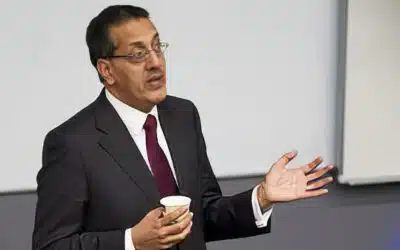
A recent report, Class Ceiling, led by University of Manchester chancellor Nazir Afzal, found that access to the creative industries remains unequal and that entry routes “still depend on who you know”.
“When a job comes up North, nine times out of 10 there’ll be loads of crew from London working on it. There is so much talent up here in the North, why are all the crew coming from the south?” asks Russell.
“We’re all trying to work but it feels like it’s such a competitive industry, when it shouldn’t be. I’ve worked with some really talented people and it’s a massive shame when I hear them say they’re leaving the industry because they can’t survive. It’s ridiculous. It’s sad hearing they’ve given up.”
With work slowing down, he’s previously considered looking into a telecoms course as an alternative career, hoping to earn what he describes as a “proper, decent wage”.
“But because of how difficult it is just to get into the industry, I’m also very reluctant to. If I go, it’s not just a job I can do on the side. It’s something that you’re either in or not in with. I spent a good chunk of my life trying to break into this industry. If I walk away now, am I ever going to be able to come back?”
What comes next?
The government said it would appoint a Freelance Champion in 2025, but the role has yet to be filled. In a recent House of Lords debate, the issue was raised again and the government responded that it is working “closely with industry” to finalise the role with a roundtable planned with freelancers, and an appointment would be made “as swiftly as possible”.
But for many freelancers, that timeline is not good enough.
“The industry is in complete crisis. In the past three years it has fluctuated from getting a little better to worse, depending on who you are,” says Dion Russell.
“Government-wise, I feel like we’ve all just been left and hung out to dry. Freelancers are the glue that holds the industry together. Without us, it will struggle.”
*Names have been changed for anonymity.
Tomorrow, our special focus week continues, shining a light on two contrasting stories: the filmmaker trying to make it and someone who feels like they’ve been left behind in an “ageist” industry.
Later in the week we’ll also be exploring what’s driving some of these challenges according to Northern indies, what they’re doing to adapt, and the solutions creatives say they need most.