



BAE Systems has upgraded its financial guidance for 2026 after delivering another strong first half, with the defence giant highlighting a series of major developments centred on its Lancashire operations.
One of the regions biggest brands, which employs thousands of people across its Warton and Samlesbury sites, said manufacturing is already underway on components for Türkiye’s fleet of 20 Eurofighter Typhoon aircraft, while engineers in Lancashire have also played key roles in the UK’s first uncrewed Collaborative Combat Aircraft and the next phase of the Global Combat Air Programme (GCAP).
READ MORE: Leeds transport tech acquires First Group subsidiary in £48m deal
The update came as BAE reported a 9% increase in sales to £15.8bn for the six months to 30 June, underlying earnings before interest and tax up 11% to £1.7bn, and a record order backlog of £84bn. The performance prompted the company to raise its full-year guidance across all key financial measures.
Charles Woodburn, Chief Executive, said: “Across the business, our outstanding teams have delivered another strong period of operational and financial performance, which gives us the confidence to upgrade our full year guidance.
“Alongside our focus on meeting our customers’ needs today, we continue to invest in our business to accelerate innovation, drive efficiencies and boost capacity, so we can get mission-critical capabilities into the hands of those who need them, faster. Examples include our new collaborative combat aircraft, designed to enable our customers to deploy a combined future force of crewed and uncrewed fighter jets, and investment in our facilities in Texas and New Hampshire to support the US Government’s ambition to quadruple production of critical munitions.
“The global threat picture remains highly volatile and governments are responding with sustained increases in their defence budgets. The combination of our proven execution, diverse geographic footprint and continued investment in our technology and facilities, alongside our healthy order backlog and growing opportunities across our markets, positions us to keep delivering long-term growth.”
Among the most significant developments for the North West is progress on Türkiye’s Typhoon programme. BAE said it has secured a contract from the UK Government to provide training, support equipment and services for the country’s 20 aircraft, ordered in October 2025. Manufacturing of the first components is already underway at its Samlesbury site and across the Eurofighter partner nations, with first deliveries scheduled for 2030.
Warton has also been at the centre of efforts to develop new counter-drone capabilities. During the period, BAE successfully test-fired the APKWS precision weapon from a Eurofighter Typhoon, demonstrating what it described as an affordable counter-drone solution. The firing trial took place at the company’s Warton flight test facility in April using one of its test-and-evaluation aircraft before the system was rapidly moved into operational deployment with the Royal Air Force in the Middle East.
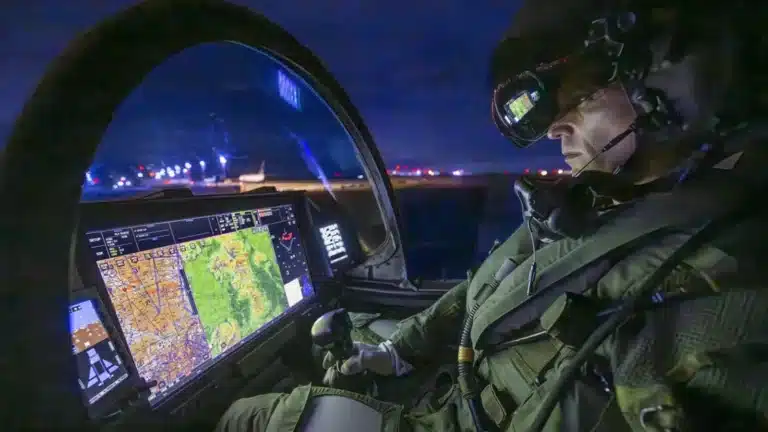
The Lancashire site was also responsible for designing and building Brontanax, unveiled at the Farnborough International Airshow last week as the UK’s first uncrewed Collaborative Combat Aircraft. The aircraft has been developed to provide electronic warfare and precision strike capabilities against both airborne and ground targets.
Meanwhile, Edgewing, the joint venture between BAE Systems, Leonardo and the Japan Aircraft Industrial Enhancement Co. Ltd., secured its first international contracts for GCAP worth more than £5bn. The agreements will fund completion of the programme’s advanced concept and assessment phase, alongside further joint detailed design and development work, with UK activity taking place in Lancashire.
The company said it secured £16.4bn of new orders during the first half and ended the period with a record £84bn order backlog.
Following the strong start to the year, BAE now expects sales to increase by between 8% and 10% in 2026, up from previous guidance of 7% to 9%. It has also upgraded its expectations for underlying EBIT growth to 10%-12%, underlying earnings per share growth to 11%-13%, and now expects free cash flow of more than £2bn, compared with previous guidance of more than £1.3bn.