

The Department for Culture, Media and Sport (DCMS) this morning published its Media Green Paper, Watch this space: a new strategic direction for UK media, setting out the government’s proposed approach to the future of television, public service media and trusted news.
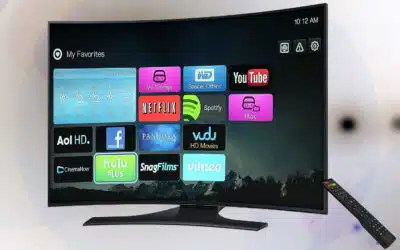
The paper is probably the most significant policy statement on television distribution since digital switchover, and confirms that Government is now actively consulting on a managed transition from Digital Terrestrial Television (DTT/Freeview) to IP-delivered television, setting out the conditions that would need to be met before such a transition could take place.
The question of transition to IP delivery seems to have moved in the paper from a case of “if” to a matter of “how.”
The Future TV Taskforce, made up of the UK’s public service broadcasters – the BBC, ITV, Channel 4, 5, STV and S4C – and free TV platform operator Everyone TV (formerly Digital UK), has broadly welcomed the Media Green Paper, which it says sets out a proposed approach to securing the long-term sustainability of public service media, albeit not without some caveats – not least ensuring the sustainability of public service broadcasting in a post-terrestrial age.
Responding to the paper, the Future TV Taskforce said:
“As our society becomes increasingly digital with more services moving online, the public service broadcasters are focused on ensuring UK broadcasting with trusted, high-quality content, remains at the heart of the UK’s media environment.
“To that end, the Taskforce, which is focused on the future of TV distribution, supports a carefully planned and managed transition to internet-delivered TV (IPTV) in 2034. Progress will depend on clear policy direction, coordinated delivery and a strong focus on digital inclusion.
“Any change to how TV is delivered should form part of a broader UK-wide shift towards a fully digital society in which everyone can participate. A transition to IPTV delivered in a way that leaves no-one behind, could help unlock wider economic and societal benefits while also supporting the long-term sustainability of public service media.
“Well-designed, internet-delivered television can enhance the viewing experience for all audiences, combining the familiarity of live TV with the innovation of streaming, including superior accessibility features such as voice control. The UK’s public service broadcasters have already taken significant steps in IPTV through the launch of Freely, combining live TV channels alongside well-established on-demand services including iPlayer, ITVX, Channel 4, 5 and STV Player.
“The TV Taskforce, comprising all six public service broadcasters, does not think it’s fair to leave a small number of older and vulnerable people on an out-dated TV service which is only going to deteriorate over time when there’s an opportunity to help everyone get online. By the mid-2030s, the number of broadband-less homes is expected to fall to approximately 220,000.”
Jonathan Thompson, chair of the Future TV Taskforce and CEO of Everyone TV, which is responsible for the day-to-day operation of the Freeview, Freely and Freesat platforms, added: “We welcome the Government’s Media Green Paper which recognises the consumer-led shift towards internet-delivered television. As part of a wider move towards a fully inclusive digital society in the mid-2030s, we support a carefully managed transition in which no-one is left behind.”
Maintaining duplicative parallel distribution systems (DTT broadcast and IP) over the long-term, claims the taskforce, risks slowing progress, creating uncertainty for audiences and industry, as well as reducing the amount of money PSBs can invest in original, homegrown content for viewers across the UK to enjoy.
Government and industry, it concludes “should work together to deliver a well-planned and inclusive transition, with public service broadcasters committed to playing their part in future-proofing free TV in a streaming age.”
Key facts
- 2.6m households are reliant on digital terrestrial television today, either because they don’t have access to IPTV or do not have broadband. 9.7m have Freeview on a main set with 73% of these also streaming (source: Barb Q1 2026).
- By 2034, forecasts indicate there’ll be under 1 million Freeview homes and only 220,000 of these will remain unconnected (source: 3 Reasons, independent analysts in TV platform dynamics, May 2026).
- For 97% of households, there would be no additional monthly cost if DTT was replaced with IPTV today. 95% already pay for broadband and 56% of non-internet users already pay for a landline telephone and these lines will be replaced by IP-delivered lines in the next two years (source Barb Q1 2026 and Ofcom Technology Tracker 2025).