

As Liverpool City Region welcomes significant investment for its creative industries, key industry leaders are looking to leverage opportunities in talent development, technology, and Northern collaboration to strengthen the city region’s international profile.
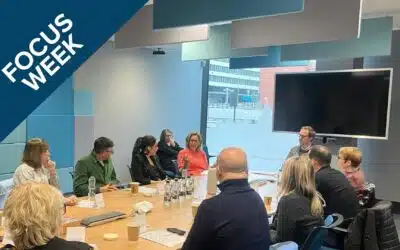
At an exclusive roundtable hosted by Prolific North in partnership with Growth Platform on 11 November, leaders from across Liverpool City Region’s creative industries came together to explore the future of the city region’s growth and innovation.
READ MORE: Liverpool’s creative economy accelerates with record investment and bold new strategy
While yesterday’s coverage focused on scale-up support and where investment could have the greatest impact, today’s discussion turns to how the city region can build on its unique creative strengths across film, TV, music, and games, as well as its wider creative businesses, and set priorities for the future.
“Being part of a Northern ecosystem is really important”
As the government wants to see regions better connected for business growth, David Prior (Prolific North) asked creative leaders in the room whether they see value in being part of a Northern creative ecosystem.
Reflecting on procurement processes in places like Greater Manchester, Helen Calder (Gingerhead Marketing) pointed to the importance of intentional local partnerships, particularly for creative agencies, as they can often help unlock “bigger projects that get national recognition.”
There was broad agreement that businesses stand to benefit from pan-Northern initiatives, provided they deliver clear, tangible outcomes while still allowing the Liverpool City Region to highlight its own distinctive creative strengths.
And although some felt that a fully unified Northern ecosystem may be ambitious given Liverpool’s historically “deep-rooted” competitiveness, Nicola Docking (Poke Marketing) noted that this only reinforces the opportunity to double down on a “strong” Liverpool brand that showcases what the city region uniquely offers and how it can complement its neighbours.
READ MORE: Liverpool City Region’s creative industries unite behind a shared ambition for growth
The conversation then turned to the impact of new and existing creative initiatives across the North and how they currently work, including the ambition of The Great North, a mayoral-led collaboration aiming to strengthen the region’s visibility and economic impact.

One of its key priorities includes The Great North Creative partnership, which aims to drive inward investment and economic growth through the North’s creative industries.
There was significant discussion on the opportunities these initiatives can create, not just for place marketing but also for more joined-up approaches to talent, innovation, and creative sector growth.
And that shift from competition to collaboration is already taking shape, with the success of Screen Alliance North cited as a standout example by Sol Papadopoulos (Hurricane Films). The initiative, created by Liverpool Film Office, North East Screen, Screen Manchester and Screen Yorkshire with the support of the BFI, has worked to tackle skills shortages and improve access to training for talent across the film and TV industry.
The impact of Liverpool City Region’s Gamechangers initiative was also highlighted, as it has helped spark new strategic partnerships aimed at developing the next wave of games talent, bringing together what is often seen as a highly competitive industry to collaborate on training and address shared skills gaps.
READ MORE: What’s ‘unique’ about Liverpool’s £220m games sector and tackling the industry’s talent dilemma
More collaborations around regional talent development, particularly for agencies in the region looking to scale, could be a “really good use of support and funding,” added Helen Calder (Gingerhead Marketing).
In the music world, a new Northern Music Export Office was announced at SXSW festival in Austin, Texas, earlier this year, aiming to accelerate the international growth of the North’s booming music scene by offering support and export opportunities for industry professionals and showcases.
Becky Ayres (Sound City) emphasised that “being part of a Northern ecosystem is really important” in the music sector for uniting on talent development, sharing challenges and opportunities, and showcasing the region’s creative strengths.
While London may still be seen as the “epicentre” of many creative industries, she stressed it is “vital” for Liverpool City Region’s creative businesses to build strong connections not only with other Northern regions, but also with cities across the UK and internationally: “It is really important to position Liverpool as a place where innovation, ideas, inspiration, and exciting companies are.”
She also proposed a high-profile, city-wide branding campaign, inspired by Austin’s SXSW festival, to welcome visitors via airport billboards, trains, and on motorways, showcasing Liverpool’s Music City identity to a wider audience.
While it was widely acknowledged that creative businesses in Liverpool City Region have had some opportunities to showcase themselves internationally, whether that be through events or by attending trade missions, Nick Howe (Uniform) suggested there could be more “lobbying” more widely across the North to raise the profile of the creative industries on a global stage through increased case studies and showcases.
Building on this, Sol Papadopoulos (Hurricane Films) noted that Liverpool already “has that recognition” as a creative brand internationally, providing a strong foundation for the region to expand its global reach even further.
Jack Dotchin (Flatdot Marketing), who leads a digital marketing agency, raised the challenge of how results-focused businesses like his can achieve the same recognition as other creative success stories, given that their work is centred on driving tangible outcomes for other companies. Nicola Docking (Poke Marketing) suggested that creative businesses across the region could shout more “about the great things we have done”.

Local priorities
The conversation then shifted towards local priorities, highlighting the three key growth areas set out by the Liverpool City Region Creative Industries Board. At the top of the board’s new strategy and action plan is a focus on strengthening the region’s creative offer through cross-platform storytelling.
Highlighting the value of international co-productions in the film and TV sector, Papadopoulos (Hurricane Films) noted that visiting productions could collaborate more closely with local partners, strengthening regional skills and networks.
He suggested Liverpool City Region’s existing Production Fund could build on this model by encouraging major productions filming in the city region to partner with local companies. This approach would ensure that investment made in the region directly contributes to developing local talent and industry expertise.
READ MORE: “Liverpool is the star” as BBC drama This City Is Ours boosts economy
At FACT, Liverpool’s centre for film, art and creative technology, Nicola Triscott is focused on developing the next generation of artists and creatives. She noted that FACT’s involvement in the BFI Film Academy and its regional, collaborative approach has been hugely beneficial, giving young people the chance to work across cities and broaden their experience.

However, she highlighted that many talent programmes remain highly sector-specific, often centred solely on film. Liverpool, she suggested, could turn this into an opportunity by investing in initiatives that prepare young creatives to work across multiple, emerging platforms.
With the city region’s rich creative ecosystem, this cross-platform approach could become a genuine “superpower,” nurturing talent that can drive innovation across film and TV, games, and immersive media.
Ayres (Sound City) emphasised that Liverpool’s internationally renowned music heritage remains one of its greatest creative assets, alongside its booming games sector and how it has become one of “the most premier locations for film and TV outside of London.”
She suggested that the city region could attract even greater international attention by weaving the success stories emerging from those sectors together, rather than trying to position itself as “all things equally”.
Developing talent for the future
In the final part of the discussion on upskilling and reskilling existing and emerging creative talent in the latest technologies, there was agreement that the region already has a solid base of talent and expertise.
But there was an emphasis on the need for more advanced, industry-ready training in emerging technologies such as AI to ensure the creative workforce is prepared for future challenges and opportunities.
Louise Kemp (Nineteen Agency) explained that while many early-stage programmes provide basic digital or AI skills, mid-career professionals and emerging creatives who are already using these technologies now need more sophisticated, practical training that enables them to apply AI meaningfully within their roles.
The importance of responsive, tailored programmes that reflect the evolving needs of creatives was highlighted too. Nicola Triscott explained how FACT’s Studio Lab was built up around what freelance creators were asking for, rather than following a one-size-fits-all approach.
With a significant community of creative freelancers in the Liverpool City Region, Papadopoulos (Hurricane Films) said there is still a UK-wide challenge of mid-career professionals leaving the film and TV industry. He noted that many have retrained in other fields and suggested exploring mechanisms to retain freelancers, enabling them to continue contributing their expertise to the region’s creative sector.
Calder (Gingerhead Marketing) suggested that there is an opportunity for an “education piece” to emphasise the value of freelancers to businesses in the city region, while showcasing their work in supporting the continued growth of the creative sector.
Nick Howe (Uniform) highlighted the value of tailored upskilling in creative businesses, especially for adopting new technologies. His company now uses over 20 AI tools, developed internally through experimentation and embedding them into workflows, which has boosted efficiency and staff skills.
While city-wide training can be valuable for commercial skills or soft skills, he questioned whether training in the latest technologies could address the specific, varied needs of individual creative businesses.
With varying levels of training needs across businesses, there was agreement that a ‘roadmap’ would be more beneficial, showcasing how creative businesses have successfully experimented or upskilled staff in technologies such as AI.
Triscott (FACT) highlighted the work of membership organisation, The Culture Network, which has started organising early-stage meetings focused on collaboration, skills sharing, and training opportunities.
Ayres (Sound City) stressed the opportunity for the wider public sector to work more closely with industry to identify where new skills — particularly in AI — are most needed. By partnering with education providers to shape training around real industry demand, the region can equip young people with the tools they need for emerging creative roles.
A key takeaway from the roundtable was that with a clearer, shared narrative, stronger collaboration across the North, and on-going investment in talent development, Liverpool City Region’s creative sector is well placed to raise its profile nationally and internationally.
Tomorrow, our special focus week continues as Helen Cross, Creative Industries Lead at the Liverpool City Region Combined Authority, reveals how the region’s creative ecosystem is thriving through a mix of grassroots initiatives, hubs and sector-wide programmes that are driving growth, nurturing talent, revitalising spaces and laying a foundation for future investment and expansion.
Read more – Liverpool City Region Creative Focus Week
Read the other stories in this series:
📌 1. Liverpool’s creative economy accelerates with record investment and bold new strategy
An overview of the region’s creative growth, workforce scale, investment and new strategy guiding its next chapter.
👉 https://www.prolificnorth.co.uk/feature/liverpools-creative-economy-accelerates-with-record-investment-and-bold-new-strategy/
📌 2. Liverpool City Region’s creative industries unite behind a shared ambition for growth
Insights from a roundtable on collaboration, shared priorities and where businesses see opportunity and challenge.
👉 https://www.prolificnorth.co.uk/feature/liverpool-city-regions-creative-industries-unite-behind-a-shared-ambition-for-growth/
📌 3. Talent, tech and deeper Northern ties set to shape the future of Liverpool’s creative economy
How talent development, tech adoption and wider Northern collaboration could strengthen the region’s creative profile.
👉 https://www.prolificnorth.co.uk/feature/talent-tech-and-deeper-northern-ties-set-to-shape-the-future-of-liverpools-creative-economy/
📌 4. Liverpool’s creative ecosystem — thriving, bold and built on collaboration
A deep dive into the ecosystem’s strengths and partnerships powering creative growth across sectors.
👉 https://www.prolificnorth.co.uk/feature/liverpools-creative-ecosystem-thriving-bold-and-built-on-collaboration/
📌 5. From ambition to action — new strategy marks a turning point for Liverpool’s creative economy
A look at how strategy is translating into action, with insights on next steps and sector priorities.
👉 https://www.prolificnorth.co.uk/feature/from-ambition-to-action-new-strategy-marks-a-turning-point-for-liverpools-creative-economy/