


The man whose leaked memo brought down the BBC director general and led to another crisis at the public broadcaster has said that the BBC is “not biased” and that Donald Trump’s reputation was “probably not” damaged by the Panorama editing scandal he highlighted in his memo to Ofcom and the UK’s Culture, Media & Sport Department.
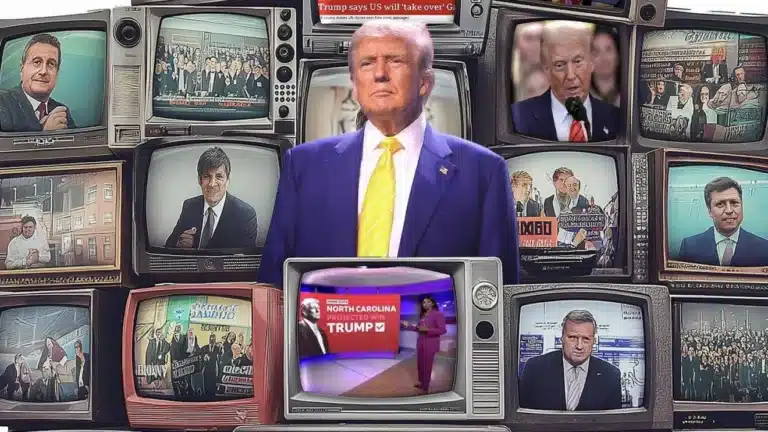
His memo, published by The Telegraph this year, exposed how the BBC had spliced footage of Donald Trump from one hour apart to make it appear as if he was inciting a riot on Jan 6, 2021.
Prescott raised other issues with BBC coverage of Gaza, the trans debate and ethnic minorities in the UK, although it was the Trump edit, which has led to a $1bn threat of legal action, that has generated headlines.
Appearing in front of the UK’s Culture, Media & Sport Committee (CMSC) yesterday, where he was pushed on whether the edit damaged Trump, Prescott noted “I can’t think of anything I agree with Donald Trump on.”
READ MORE: Lancaster tech firm issues Black Friday cybersecurity warning to shoppers and retailers
His memo nonetheless was the catalyst for the resignations of Director General Tim Davie and news chief Deborah Turness – Prescott had been advising the BBC’s Editorial Guidelines & Standards Committee (EGSC) but stepped down as he felt his concerns were not being taken seriously.
The advisor said he watched the Trump Panorama last year and immediately felt like it was imbalanced. He passed this on to ex-BBC correspondent David Grossman, whose review was the basis for his memo.
“It felt quite anti-Trump,” said Prescott. “But there was a black and white response [from the BBC]. They did not accept there was a problem with their US presidential coverage or the Panorama program. And they had a different view about the video splice.”
Prescott was repeatedly pushed by the committee on whether the BBC displays bias with its news coverage, but he denied this: “I don’t think it’s biased,” he said. “I didn’t use that phrase anywhere in the memo. Let’s be clear, tonnes of stuff it does is world class. Everything I spotted [in the memo] had systemic causes and the root of my disagreement is the BBC was not treating these as having systemic casues.”
While accusations of institutional bias have been thrown around since the BBC entered crisis mode, Prescott saw the “systemic causes” as the BBC refusing to listen to criticism of its news coverage and being overly defensive.
“I was frequently seeing the BBC’s idea of dealing with something was to change the editors around and tweak guidelines,” added Prescott. “There was never any willingness to look at what went wrong there and there were deep implications.”
Prescott also denied that he had leaked the memo to the Telegraph and said the fact the Telegraph is seen as right-leaning was a “bit of a barrier to people elsewhere on the [political] spectrum taking this as seriously or thinking it was as straightforward as it seems.”
Prescott added that he took no pleasure from Davie resigning, calling him a “supreme talent, and it’s a tragedy he’s gone, but he had this blindspot on editorial failings…He seemed to be to be doing a first rate job across 80% to 90% of the portfolio apart from his blindspot on editorial failings.”
Prescott also joined the chorus of voices calling for the director general job to be split in the future.
Prescott added that he is a passionate champion of public service broadcasting, who took on the EGSC adviser role as it looked like a “fantastic opportunity.” “I come from a working class background, I’m the son of immigrants and got into Oxford from a local state school partly because of the excellence of public service broadcasting,” he added.