



Manchester Fashion Week is in full swing this week returning after a decade-long absence.
Workshops, panels and runways worked in tandem on Day 2, moving beyond spectacle to interrogate the forces shaping fashion’s future — and spotlighting makers pushing new materials, methods and mindsets.
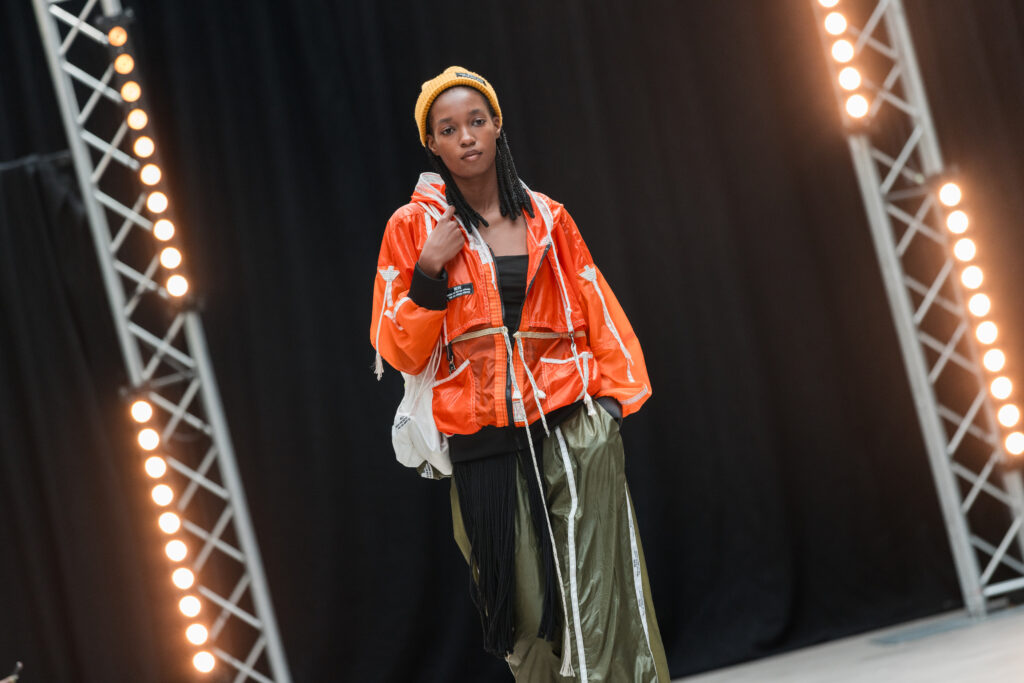
On the runway, Janey Cribbin’s Mancunia Ugly reimagined deadstock fabric, upcycled car interiors and vintage tartans into bold, unisex pieces rooted in Manchester’s DIY car culture and unapologetic maximalism.


Make It Wet, by Megan Hughes, drew on her North Wales coastal heritage, merging vibrant marine-inspired prints with oversized silhouettes and a slow-made ethos. BEPO added an innovative edge with outerwear constructed from excess stock materials, transforming utility into sculptural design.
Śilpa, the Manchester-based British South-Asian label by Myno Macheda, fused clean punk and surrealism with heritage references, offering hand-finished, minimal-waste pieces that felt both personal and enduring.
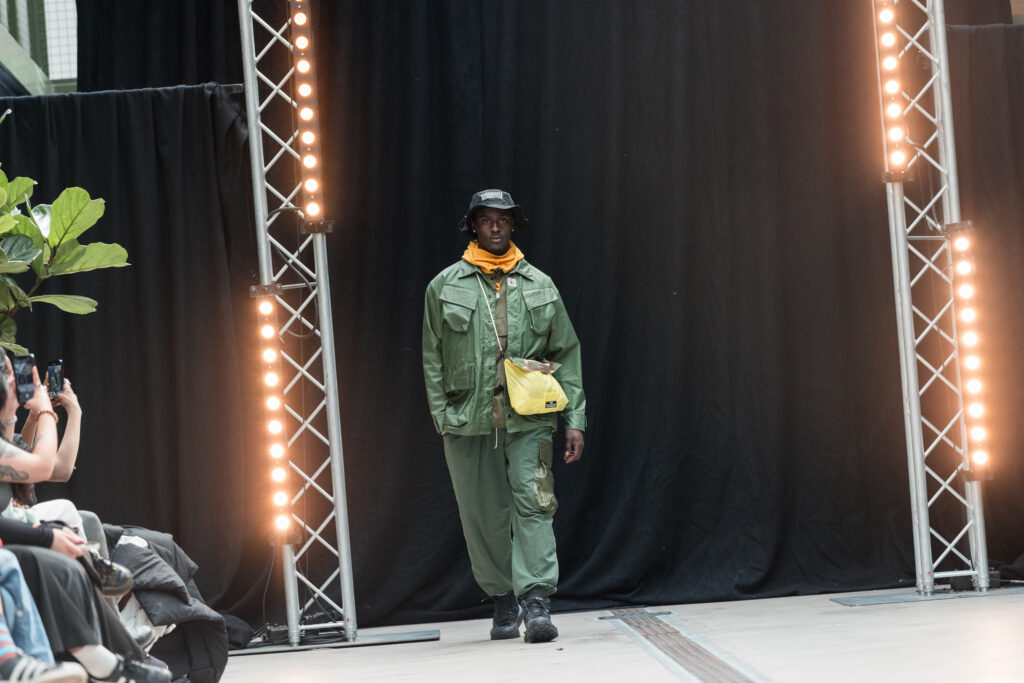
Closing the day, À Couvert presented sharp, conceptual menswear in luxury technical fabrics. Founded by James Small, the brand blends military heritage with modern precision, creating limited-edition outerwear made in Manchester as true investment pieces.
The second day of also featured a workshop led by Safia Minney MBE and (un)sustainability consultant Lavinia Muth, unpacking the colonial legacies embedded in global supply chains and how to dismantle them.


Lavinia Muth says, “Events like Manchester Fashion Week are not only about promoting ‘better’ consumption; they are critical intervention points. They are where we collectively disrupt the industry’s harmful engine by arming the public with the tools to decode its narratives. When we pull back the curtain on social washing and challenge the shame shifted onto the Global South, we might empower people to stop being passive consumers and become active, critical citizens. “This unlearning is the first and most vital step toward dismantling the system and demanding the genuine, radical accountability that will forge a responsible fashion future.”
The evening opened the conversation to the public with The Future Fashion Fair, hosted by Carry Somers (Fashion Revolution) joining Safia Minney (Fashion Declares), and Paul Foulkes-Arellano from Eco Age, Manchester Fashion Week’s media partner, in dialogue.


The night concluded with Music Meets Fashion and Culture, where Wayne Hemingway and DJ Paulette reflected on Manchester’s creative intersections.
Gemma Gratton, Executive Producer, Manchester Fashion Week, said: “Day two was about going deeper, asking how fashion is made, who it impacts and what needs to change. The debates on stage showed that Manchester is unafraid to confront the industry’s hardest questions, while the runways proved its creativity is as uncompromising as ever.”
Pictures courtesy of Eco Age. Photos by Ines Bahr.