As search behaviour fragments, customer acquisition costs rise and consumers spend more time discovering products away from traditional channels, e-commerce brands are facing a rapidly changing landscape.
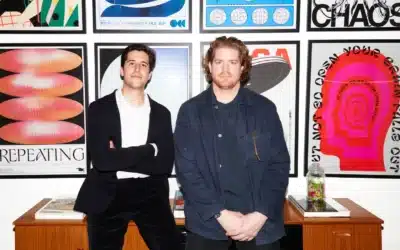
Those challenges formed the backdrop to Embryo’s latest industry event, E-commerce unboxed: From scaling up to standing out, held in Manchester and attended by marketers from brands spanning fashion, home, health, sport and appliances.
The morning session brought together experts across organic search, social commerce, paid media and creative to explore what it takes to build scalable, high-margin brands in what Embryo described as a “post-traditional market”.
Opening the event, Embryo Organic Search Director Jess Atkinson argued that brands can no longer think about SEO in isolation.

“I want to talk about something I think a lot of us are feeling right now,” she told attendees. “Search is getting messier. Clicks are harder to win and ranking isn’t enough any more – which means we need to understand our audiences in order to win.”
Jess outlined how search behaviour has evolved from simple information retrieval through to today’s “search shift”, where consumers increasingly discover information across multiple platforms rather than relying solely on Google.
With AI Overviews, AI-powered search experiences and the growth of zero-click searches reducing opportunities for brands to drive traffic, she argued that visibility alone is no longer enough.
“People are discovering more… but clicking less,” she said. “Which means visibility alone isn’t enough anymore – brands need to earn attention, trust and memorability before the click even happens.”
Instead, she suggested marketers need to focus on understanding audience psychology and emotional drivers.
“So this isn’t an SEO problem any more,” she said. “It’s attention and attention is psychological.”
The event’s second session explored the growing importance of social commerce, with Novaro founder Chris Grimes highlighting the rapid expansion of a market where content, community and commerce intertwine.
Describing social commerce as “shopping where content, community and commerce come together in real time”, he pointed to forecasts showing the channel’s continued growth and argued that consumers increasingly expect seamless purchasing experiences within the platforms where they discover products. He also cited examples of live shopping success, including one campaign that sold 1,000 microwave units within its first 30 minutes.

Later attention turned to paid media and the challenge of maintaining profitability as acquisition costs continue to rise.
Embryo Paid Media Director Callum Leonard focused on the need for brands to move beyond revenue-based optimisation and instead train advertising platforms to optimise for profitability.
With customer acquisition costs increasing across many sectors, Leonard encouraged marketers to reconsider the metrics they use to judge success and introduced the concept of Profit on Ad Spend (POAS), arguing that campaigns should be optimised around contribution margin and real profit rather than headline revenue figures alone.
Alongside this, Embryo’s paid social team explored how advances in Meta’s advertising algorithms have fundamentally changed the role of audience targeting. Rather than relying on increasingly complex audience segmentation, the session argued that creative has become the most powerful targeting tool available to marketers.
The team stressed the importance of creative diversification, breadth and quality, alongside structured testing programmes built around clear hypotheses.
The event concluded with a session from Embryo Chief Creative Officer Clair Heaviside, who challenged brands to rethink the role of creativity in driving growth.
Drawing on research suggesting that 95% of a brand’s potential audience is not actively in market at any given time, Clair argued that performance marketing alone can only capture existing demand.
“Performance marketing harvests demand,” she said. “Brand and creative marketing creates it.”
She warned that many brands have fallen into a “creative crisis”, producing increasingly similar content optimised for short-term metrics while failing to build distinctiveness, trust and memorability.
Instead, she encouraged marketers to focus on the factors that make brands recognisable and memorable, highlighting salience, emotion, distinctive assets and relevance as key drivers of attention.
Guests received Embryo’s latest e-commerce report, which analyses the current state and future of the UK e-commerce landscape, covering web platforms, direct social media selling, reducing advertising waste, AI-powered product discovery and key predictions for 2027.