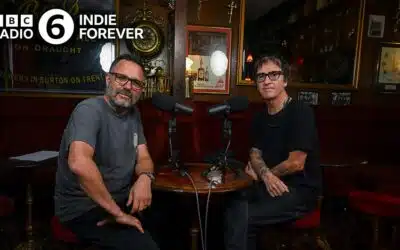


Paul McCartney has reflected on everything from influencers and modern fame to working-class intelligence and political division in a pair of wide-ranging podcast appearances for Goalhanger.
The former Beatle appears across two separate interviews this week on podcasts The Rest Is Entertainment and The Rest Is History, speaking to hosts including Richard Osman, Marina Hyde and historian Tom Holland.
Across the conversations, the Beatle discusses why he refuses fan photos, the downside of influencer culture, the enduring power of Beatles songs and how Liverpool’s wartime resilience shaped the band’s humour and outlook.

Speaking on The Rest Is Entertainment, McCartney explained why he now turns down requests for selfies from fans.
“As time’s gone by, things have changed. Now – phones. So if I meet someone, they’re reaching for their phone, and I say: ‘I’m sorry, I don’t do pictures.’ And that is radical these days.”
He added: “I don’t want to feel like that monkey. And when I take a picture with someone, I do feel like him. I’m not me anymore – I’m suddenly something else.”
McCartney also admitted he struggles to understand influencer culture, joking that “people who don’t seem to be particularly talented are incredibly famous.”
“You’ve got to be careful about saying that,” he said. “Because it makes you sound very old-fashioned. Which I am.”
Elsewhere, he reflected on fame and celebrity culture, arguing that younger artists now view attention differently.
“When you’re first famous, you love it – because it’s what you were trying to achieve,” he said.
“There was none of this ‘oh, people are bothering me’ – that’s a modern affliction. We loved it.”
The music icon also spoke candidly about still performing Beatles classics for audiences, revealing he sympathises with fans who pay to hear familiar songs.
Referencing Bob Dylan, McCartney said: “I’ve been to see a couple of Bob’s shows and honestly, I couldn’t tell what song he was doing.”
“And I get it if he doesn’t want to do ‘Mr. Tambourine Man’ – maybe he’s fed up with it. But I would like to hear it. And I paid.”
He added: “They’ve paid a lot of money, and I remember as a kid saving up – a paper round and everything – to go to a Bill Haley concert. I knew what I wanted. I wanted him to do his hits.”
One of the most striking moments came as McCartney described watching audiences unite during performances of Hey Jude.
“In Trump’s America, where Republicans and Democrats are at each other’s throats – when we do that song, they’re not,” he said.
“They’re all loving it. And it’s like, wow. Suddenly this room has forgotten all of that. We’re not going to argue; we’re just going to sing together.”
The second interview, airing on The Rest Is History, sees McCartney reflect more deeply on his Liverpool upbringing, family life and the formative years of The Beatles.
He credited Liverpool’s wartime spirit and Irish influence with shaping the band’s humour and resilience.
“I think with the Irish influence and then coming through the war, and having to be happy when bombs were falling, there was a lot of music when I was a kid,” he said.
“And I think that was something that found its way into the Beatles.”
McCartney also shared memories of his mother working as a midwife, recalling seeing her cycle through heavy snow to attend births.
“She got on her bike in this deep snow, with her uniform on, with a little suitcase on the back and a little basket on the front,” he said.
“I have this memory, in the street lights, of her cycling out through the snow and thinking, wow, that’s pretty brave.”
Reflecting on his upbringing, he added: “I came from a very loving family of very smart working-class people.”
“I always say to people: don’t underestimate the working class.”
The interviews also include stories about writing his first song after his mother’s death, The Beatles’ rapid-fire recording process at Abbey Road Studios, and his thoughts on memory, myth and history.