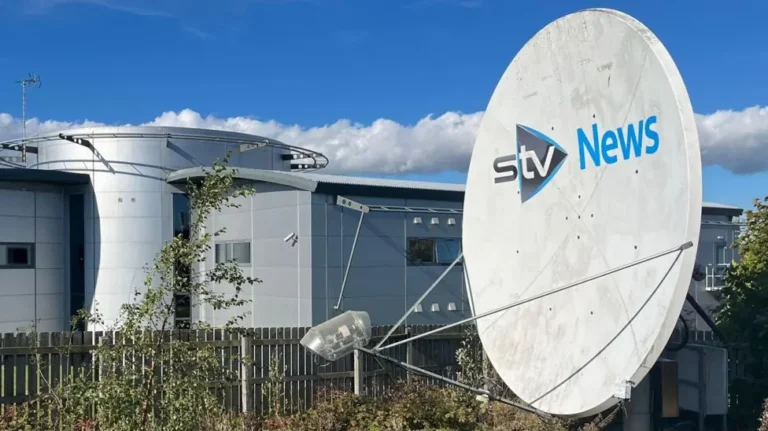

STV has welcomed Ofcom’s approval of its application to amend its Public Service Media (PSM) Channel 3 licences around news content, in particular cuts to its flagship programme, STV News at 6, but not everyone is on board with the plans – including the Scottish journalists’ union.
As a result of the changes to news commitments, the first in twenty years, the broadcaster will “continue serving its audiences with high-quality regional news, gathered and produced across Scotland,” but in a way that is “sustainable for the business.”
At its core, critics say the application will bring an end to a dedicated news service for the North of Scotland, with all local news now coming from Glasgow.
READ MORE: Scottish cider? Yeah, that needs a campaign
STV’s application was “submitted in response to significant, long-term changes in the way audiences consume news,” with linear audiences declining alongside a growth in engagement with online and social content throughout the day. These shifts in audience behaviour, says STV, are impacting all broadcasters, and the changes to its Channel 3 licences reflect the acute challenges presented in Ofcom’s research and call for action in the sector in its report, Transmission Critical: The future of Public Service Media.
STV now plans to implement changes to its news programming in the summer:
- STV will create two versions of STV News at 6
- STV News at 6 programmes will include a shared section broadcast by both licences (a maximum of 70% of programmes’ duration) featuring stories of interest across Scotland with contributions from reporters around the country, plus separate sections with content specific to each of the north and central areas (a minimum of 30% of the programmes)
- Newsgathering resources will remain on the ground at all existing sites in Inverness, Aberdeen, Glasgow, Edinburgh and Dundee as well as Holyrood and Westminster
- Presentation of STV News at 6 will be from its Glasgow studio, with the Aberdeen studio also regularly in use
- The presenting team will include senior journalists from both the north and central regions
- A wide range of local, regional and national stories will be available across multiple platforms throughout the day via STV’s rapidly expanding digital news operation
This change enables STV News at 6 to “retain the distinct regional character of both licences, with delivery of high-quality, relevant news across both its linear and digital services, on a sustainable basis and reflecting the ways people now consume news,” the broadcaster said.
Ofcom has also approved the sharing of shorter bulletins at other times of the day and the removal of the four sub-regional opts.
STV CEO Rufus Radcliffe said: “We’re incredibly proud of STV News at 6, which remains Scotland’s most watched news programme, but like all Public Service Media companies, we must respond to the significant shift in audience behaviour.
“The changes Ofcom has approved to our licences will enable us to continue serving viewers with the high-quality, trusted national and regional news they expect from us. Crucially, this will be sustainable for our business and will be accessible on air and across all the digital platforms viewers now expect.
“As a commercial Public Service Broadcaster, that receives no public funding, we are focused on the future and what we do best – trusted news and high-quality content that continues to resonate with audiences across all of Scotland.”
The National Union of Journalists (NUJ), which has been lobbying against the proposed changes since last year, was less convinced, however – along with many viewers.
Nick McGowan-Lowe, NUJ Scotland national organiser, said: “Ofcom’s remit is to act in the interests of viewers, yet today it has rubber-stamped plans that were supported by only 4% of viewers in the north and north-east of Scotland.
“This is the weakest of decisions in the face of the strongest of opposition from viewers, politicians and STV’s own journalists.”
“Other channel 3 licence holders now know that they can take greater commercial risks in the knowledge that if they make losses, Ofcom will allow them to cut back on their public service broadcasting commitments to pay for it instead.”