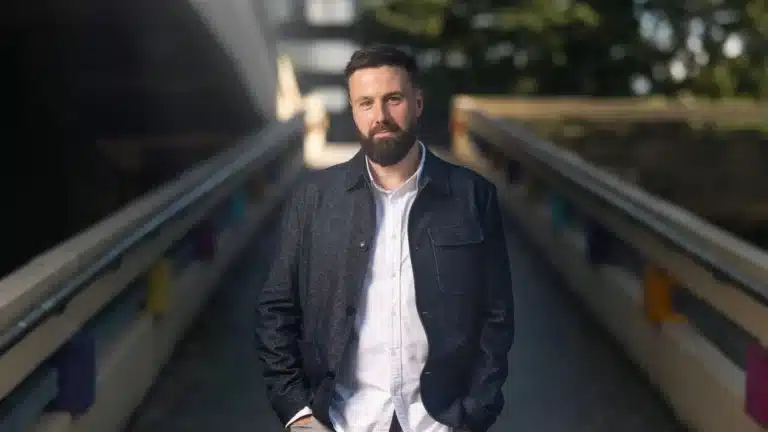

Pete Coates is a Northern Agency veteran of 18 years. Born, bred and educated in Newcastle, he spent most of his career in Leeds working for agencies including All response Media and iProspect before returning full time to Newcastle to launch and lead OMG’s rapidly growing base in the city.
Which single daily habit or practice could you not do without?
Breakfast. I think about it a bit too much to be honest. I’m no expert nutritionist, but it’s the one thing I make sure I make the time for everyday and I try to aim for something healthy that covers all of the food groups. Greek Yoghurt with home-made granola, berries, a little chopped dark chocolate and honey with a cup of coffee is my go-to. The theory is that as long as I get this meal right at the start of the day, then even if the diet goes off track over the rest of the day it’s never a complete write off!
What’s been your luckiest break?
There isn’t one specific moment that stands out as a particularly lucky break. I look back across my career and see a number of moments that were defining. Graduating university in a period of rapid economic growth, joining an agency in a digital role just as our largest client began accelerating their digital spend, and more recently returning to work in Newcastle regularly just a couple of years before one of the biggest network agencies in the world decided to open a new office here.
I don’t know if I believe in ‘luck’, but I have found that saying ‘Yes’ to new things, being prepared to push yourself beyond your comfort zone and taking the emotional risks that come with that, often leads to finding yourself in situations where opportunities present themselves.
What’s your best failure?
About 10 years ago, in a previous role, the agency lost a client that we had worked with for over a decade and that represented a very significant percentage of the agency’s overall revenue. While on paper it looked like an existential issue, what I saw around me was a pragmatic leadership team and a peer group united with the motivation to grow our way out of the problem.
Despite the account loss we managed to deliver YoY growth within 12 months by using our newfound capacity to develop new products, launch a new agency brand and win some new clients. The autonomy I was given to play my part in that built my confidence in my own potential, both by proving to myself what was possible as well as demonstrating the importance of resilience – even when things look really tough, if you keep going there is always the chance you’ll find a way to succeed.
What is the best investment you’ve ever made, either financial or time?
In 2013/14 I did the IPA Diploma – a 12-month intensive study programme billed as the ‘MBA of Brands’. I was one of only two people in that cohort from outside London and for many it was a finishing school to fine tune the knowledge and experience earned over many years working in agency strategy or planning teams.
My career had been more squiggly than that and at the time I hadn’t ever had a really good run at polishing my craft skills, so it was a bit intimidating to start with, but as the programme developed I discovered my voice. I discovered I had all the same raw materials as my peer group, but it helped me retrofit an intellectual framework for better establishing and articulating my ideas. Without it I don’t think I’d have been capable of doing many of the things I have done since.
Which podcast or book would you recommend others to read/listen to, and why?
When it comes to podcasts and books, I try to look more broadly for inspiration to influence the way I think about my work. There are a lot of great thought leaders in the marketing and agency space, but I think it’s really healthy to look for ideas outside of our industry that I can use to bring a fresh angle to the way I approach my job.
With a big daily commute, I’m a major podcast consumer. My app is filled with comedy and sports podcasts, but another good recommendation is Life Lessons with Simon Mundie (and his back catalogue of ‘Don’t Tell Me the Score’ from the BBC). There are a lot of transferable learnings wrapped up in those.
In terms of books, a recentish favourite is Red Notice by Bill Browder. A fascinating insight into how people behave in response to major shifts in political influence, and also very useful to better understand a lot of what is going on around us right now.
What one piece of advice would you give your 21-year-old self?
Those people with fancy sounding job titles are no different to you.
When you’re just starting out in your career, people’s job titles precede them and often do a lot of heavy lifting when it comes to building a mental image of them and how to behave around them. Back then, I saw them almost as a different species to me. I didn’t see the pathway for how someone like me could become someone like them.
I’ve always described myself as ambitious, but I’ve never had a plan or a target job title. I’ve just challenged myself to see where I could go next. As my career progressed and I got closer to those people and eventually got given an impressive sounding job title of my own, I realised they are just ordinary people like anyone else with strengths and weaknesses, home lives and work lives, and are as easy to get along with as anyone else.
Now I try to keep it front of mind how much heavy lifting my job title might do for me and be aware of that when communicating with the wider team.
Who or what has had the single biggest influence on your working life?
There is an endless list of people who have made a big impact on me. I’ve always believed in watching people perform in meetings, pitches, around the office and stealing the bits about them that I like with pride and trying them on for size as I go about my own work.
The individual who’s had the biggest impact on me in my professional life above all others is Kevin Cunningham. I’ve been working in agencies for 18 years and for 11 of those, Kev was my boss. To have that consistency throughout such a formative period of professional growth was really valuable. Someone to champion you, challenge you, pick you up and keep you honest. He taught me that feedback is a gift and I think of that regularly. Sometimes it’s not nice to hear that something you do needs improving and I’m not always the best at hearing it in the moment, but I always listen, reflect and incorporate it into how I show up in future.
Tell us something about you that would surprise people?
I’ve become a bit obsessed with swimming. A flippant comment by my GP back in 2017 that I should try swimming to build my core strength led me to visit the pool for the first time since I was a kid and I’ve just gone from there.
I think I left school with my 200m badge, but I’ve since completed a number of long distance open water events, including the Henley Thames Marathon which is almost 14km. Perhaps it’s influenced by my days managing PPC campaigns, but I love how-technique based it is and how many variables I can focus on optimising to get faster and more efficient.
If there was one thing you could change about your career, what would it be and why?
I’m over 40 now, so I’m in a more reflective phase of life where I’ve got very good at post-rationalising things and I can see the value I’ve extracted from moments that at the time felt tough going and where it would have been easy to push the delete button if I could. So the honest answer right now is nothing.
If you’d have asked me that five years ago, I’d have said I would have liked to have had a phase of my career which had more of an international edge to it and involved more travel and global collaboration. I have had the chance to do quite a bit of that and always learned a lot from adapting to different cultures and business practices.
What does success look like to you?
To me success is Balance. In an agency leadership role, the job is constantly looking for ways to balance the objectives of the business, our clients and our talent. Growth comes when all three combine so it is important to measure and manage all of them effectively.
I was always taught that in an agency you should spend most of your time thinking about your clients. In a leadership role, however, thinking about your people is thinking about your clients. They are the ones who a client speaks to several times a day and it is those interactions that set the rhythm of the relationship. The people side of the job is the area I have focussed most on developing over my career, so a motivated, developing and growing team has always been a great barometer of success for me.