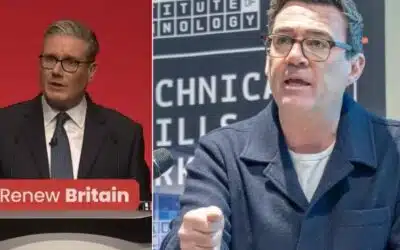


Andy Burnham, the so-called ‘King of the North’ and former mayor of Greater Manchester, has so far emerged as the only contender to throw a hat in the ring to take over as UK prime minister, after Keir Starmer resigned on Monday amid mounting political pressure.
And as soon as Starmer peeled himself away from that fated podium outside Downing Street, which has seen six prime ministers make similar emotional speeches in just 10 years, attention soon shifted to Burnham. All eyes, and the lenses of circling press helicopters, were fixed on Burnham as he headed to London to be sworn in as an MP after securing nearly 25,000 votes in the Makerfield by-election.
Burnham wasted no time in announcing his intention to put himself forward for a potential leadership contest, while others in the Labour party continue to toy with standing, such as Al Carns, who resigned as armed forces minister recently over defence funding. Nominations will be open from July 9 to July 15, with a hustings taking place on July 13.
READ MORE: Next stop Number 10? Andy Burnham wins Makerfield by-election
We’ve already had some reaction from a handful of business leaders, with the likes of Fergal O’Connor, founder and CEO of Buymedia, praising Burnham as a “supporter” of his business – after Buymedia launched its UK operations in Manchester last October.
But what’s really on the minds of top tech leaders across the North? As Burnham eyes a move to Number 10, for most industry leaders they want more opportunity, continuity amid yet more political upheaval, and a greater focus on regional investment and infrastructure.
‘Burnham champions regional growth’
For Ray Law, founder of Manchester-based financial wellbeing platform moneyappi, if Andy Burnham was to land the biggest job in the country, “many people in the North’s tech sector would be encouraged by his track record in Greater Manchester”.
“One of the things Burnham has understood better than most politicians is that successful tech ecosystems aren’t built through tech policy alone. They’re built through investment in skills, transport, education and opportunity,” explained Ray Law.
READ MORE: From Manchester to Number 10? What business wants from an Andy Burnham premiership
He continued: “That’s been a recurring theme throughout his time as Mayor. Manchester’s tech scene wasn’t created by one person, and it was growing long before Burnham arrived. But he’s been a strong advocate for the region and has consistently backed initiatives that help businesses access talent and grow. Whether it’s support for technical education, digital skills or developments like Atom Valley, he’s helped create an environment where tech businesses can thrive. And we’ve certainly benefited from it.”

He added Burnham’s reputation among founders is “generally that of someone who genuinely champions regional growth”. But would that translate on a national stage?
“Whether people agree with him politically or not, there’s a recognition that he’s spent years making the case that innovation and investment shouldn’t be concentrated in London.
“And I suspect many of us would be looking for that same mindset to be applied nationally. The UK doesn’t have a shortage of entrepreneurial talent. What it has is a shortage of opportunity in some parts of the country.”
‘The incoming prime minister has an opportunity to be even more ambitious”
According to Richard Potter, GM and VP at UiPath, who co-founded and steered Manchester-based AI firm Peak to its meteoric rise before its sale to AI giant UiPath last year, there is an “opportunity” for an incoming prime minister to create more conditions for tech companies, like his, to scale.
“The UK remains one of the world’s leading technology and AI hubs, with a strong ecosystem of founders, investors, researchers and global businesses. The government broadly recognises the strategic importance of the sector, supporting initiatives such as sovereign AI ambitions while maintaining key incentives including R&D tax relief and EIS and SEIS schemes. These foundations have helped position technology as a critical driver of innovation and economic growth,” he explained.

“Looking ahead, the incoming Prime Minister has an opportunity to be even more ambitious. The US has demonstrated how a thriving technology sector can become a major contributor to national productivity and GDP growth, and the UK should seek to capture more of that potential.
“That means creating the conditions for technology businesses to scale, while also ensuring appropriate AI governance is in place. Striking the right balance between growth and regulation will be essential, protecting national technological sovereignty, maintaining public trust and ensuring the benefits of AI are delivered safely across the economy and society.”
Elsewhere across the North, Thomas Hill, co-founder and CCO at Leeds-based tech scale up HyperFinity, placed more focus not so much on who is set to take the job – but what they’ll offer the North.
“If the new administration wants to accelerate growth in the UK tech sector, it should start by backing the regions that are already driving innovation. The North is home to world-class technology businesses, but poor transport connectivity still creates barriers to collaboration, investment and talent mobility,” he explained.
“A greater focus on regional investment and infrastructure would help unlock the full potential of these technology clusters and support more balanced growth across the UK economy.”
A similar theme emerged from Prolific North’s recent roundtable discussion with tech scale-up leaders in Manchester, who also shared their frustrations over infrastructure and poor transport connectivity.
“We need continuity in the tech world”
For others, what they’re asking for most is continuity in the middle of even more political turmoil – especially when it comes to who the next prime minister will pick to sit around their cabinet table.
“Others have rightly commented about the need for the new PM to continue to encourage entrepreneurs, to get growth back on the agenda. I’ll focus on people: the current Secretary of State at DSIT and her Ministers are probably the most competent and respected in many years,” says Stuart Clarke MBE, founder of Leeds Digital, Paceline, and UK Tech Week.
“I understand that Burnham will want to change much of Starmer’s team, to show he’s bringing real change, but don’t change DSIT. We need continuity in the tech world, with people at the top of their briefs.”
For Sarat Pediredla, co-founder of Newcastle’s hedgehog lab who recently stepped back from the business to launch AI-focused digital product studio LevelFive with Alan Morris, he’s “not super confident” about the future.
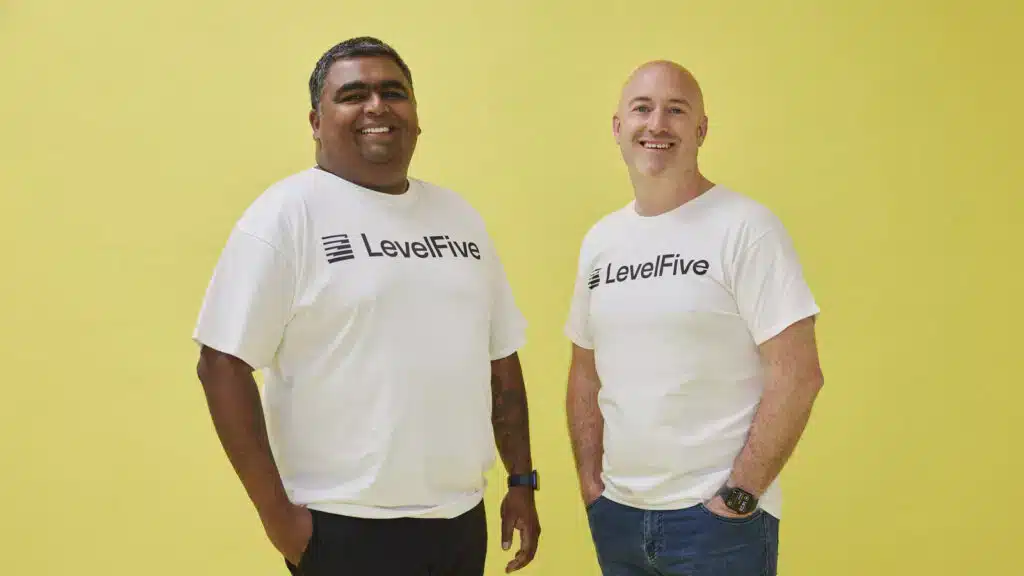
“The big challenge is that there has been so much political upheaval in the last five years, even pre-Covid. Andy Burnham, being a huge supporter of the North, I think generally bodes well for the North,” he tells me.
“But at the same time, as I talk about recently founding LevelFive, I feel for people who have to run the country. It is a no-win situation, no matter what they do.
“From my perspective, of course, politics is important and of course the North East needs to have better policy, better support, etc. but in some sense, as a business you can’t rely on that. You’ve just got to get on with your ambition and your plans, and if challenges happen, then you’ve got to deal with those and weather them.
“Political stability is good for everybody, so I’m hoping that there’ll be a bit more focus on the North, but even if there isn’t, we’ve got the credibility in the region and the entrepreneurs to be able to move it forward.”