



AI was the hot topic as industry leaders met in Manchester for Prolific North’s inaugural CTO Debrief event, where experts warned that rapid workforce shifts could leave tech leaders grappling with a very different talent pipeline in the years ahead.
Backed by headline sponsors Counter, Northcoders, Tier 1, silver sponsors AND Digital, Adria Solutions, content partner Forbes Solicitors, and drinks sponsor Elevate, the closed-door summit at Voco Hotel on 30 September offered plenty to chew over, tackling the human realities of running tech operations in 2026 and beyond.
From the squeeze on junior roles to leaner teams, people leadership and pressure to prove the value of AI, CTOs and senior tech leaders came together to tackle the realities behind one of the biggest shifts facing the industry.
Chairing the day, Prolific North managing director Alexandra Balazs set out the new event format, with a morning panel session followed by facilitated roundtables and leadership workshops held strictly under Chatham House Rules to encourage honest conversations around the shared pressures leaders are facing right now.
READ MORE: NW Cyber Resilience Centre issues Manchester G20 cyber crime warning
Amul Batra, co-founder of Northcoders and Counter, kicked things off with a welcome and a clip of Northern flagbearing Prime Minister Andy Burnham saying he “loves” Northcoders, twice no less… but for “good reason”.
Batra explained how Northcoders has helped kick-start the careers of nearly 5,000 new technologists, before highlighting the launch of Northcoders AI, a new programme designed to “uplift technologists and turn them into AI-native technologists”.
What happens to the tech talent pipeline?
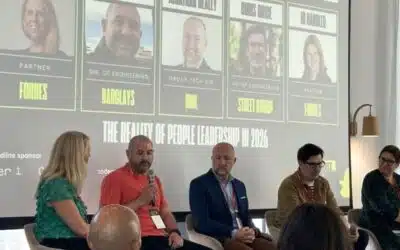
The only panel session of the day zoomed out from technology to dig into the realities of people leadership in 2026, chaired by Jennifer Smith, partner at Forbes Solicitors.
Alongside her role at Forbes, Smith is director of business development organisation pro-manchester and a director at marketing agency BDB. Across those different roles, she said there is one subject dominating the agenda at almost every board meeting right now: people.
“We’re noticing that our amazing clients that have got phenomenal cultures, they’re encountering lots of really, really challenging issues, particularly around the combination of the significant legal changes that are coming in and AI. It’s a really challenging world to navigate now,” she explained.
Despite fears that AI could take on “90% of your work”, Smith said the reality is that it has actually created “more work” in some areas before giving some savvy words of advice to leaders in the room: “Definitely invest in your people team, don’t take resource away from them because you’re probably going to need a few more people.”
She then put a question to the panel: what has genuinely become harder about leading people in tech in 2026 compared with the pre-Covid era?
Jonathan Healey, group technology director at IDHL, said the industry is living through something “the size of the industrial revolution – but it’s happening at 10 times the pace”.
Coming out of Covid, he recalled how the industry went through a “massive scramble” for talent and a market largely driven by employees. That has now shifted significantly.
While the headlines often focus on how many jobs AI could remove from the global economy, he stressed that “a lot of jobs are going to get created” too. He suggested the bigger question should in fact be which roles disappear and which emerge in their place.
One area already feeling the impact is the junior end of the market. Healey said leaders need to think seriously about how they build a future workforce if fewer junior employees are coming through tech businesses, describing the longer-term prospect as “terrifying”.
Smith from Forbes agreed that AI can be an “incredible” tool for people who are “knowledge-rich and time poor”, but also questioned what happens if fewer junior employees are given the opportunity to develop that knowledge in the first place.
“At some point, this is going to catch up, isn’t it?” she warned.
For Paul Clarkin, director of engineering at Barclays, junior employees are often the “fastest to adopt” new technologies. His concern was around how existing roles might transform and whether an over-reliance on AI could eventually lead people to “lose the domain knowledge or experience”. For him, working out how businesses can “work well” with AI is the next challenge.
Chris Grice, head of engineering at Manchester-based scale-up Street Group, pointed to a “massive reset in expectations” around what jobs look like and what good engineering now means.
With the pace of change accelerating, leaders increasingly need to be strategic and hands-on at the same time, while facing constant “pressure” to keep up as new AI models continue to emerge.
Healey from IDHL offered one example of how dramatically the job of a developer is already changing. Over the past 20 years or so, he said developers might typically have spent around 5% of their time researching how to do something, 25% planning how to carry it out and the remaining 70% writing the code.
That balance has now shifted as developers can spend around 60% of their time researching, 30% planning and just 10% actually writing code, while still pushing out “four times as many” features.
For developers who love writing code, he said that can represent a “massive transition” but it is an equally significant shift for the leaders managing them.
The increasingly complicated job of managing people
But AI is only part of the challenge. With technology, employment law and workforce expectations all changing at pace, Smith from Forbes described frontline people management as a “real fine balancing act”, particularly when managers are expected to respond to very different needs across their teams.
“You’ve got to be a really brave person to want to have your own business these days,” added Jo Handler, partner at Forbes. “If you want to have a business and be part of the c-suite, you need to accept you then will have lots of employees that will come with lots of rights, increasingly more rights.”
That turned the conversation towards progression and what happens when technically gifted employees move into management roles without necessarily having the people skills to match.
Smith from Forbes pointed out that when someone is promoted into a new role, a probationary period can be introduced as long as expectations are made clear from the outset, whether that be through a letter or contract.
“If you’re a good manager, your job is to be looking at those individuals and identifying what their strengths and weaknesses are, and where they can develop in better,” added Paul Clarkin from Barclays.
Following a discussion around best practice when it comes to culture fit, the panel wrapped up by stressing the importance of creating an open environment where people feel able to share challenges and concerns.
Building trust and transparency was seen as key, but so was maintaining clear boundaries and ensuring managers do not become an “emotional crutch”.
After lunch, the room broke into smaller groups for facilitated roundtables and workshops tackling everything from what a technology function should look like in an AI-native era to who owns the AI value story and how do you tell it to a board that doesn’t buy “trust me”.
With those discussions held under Chatham House Rules, the focus was firmly on giving leaders space to swap experiences and tackle some of the issues they are hesitant to discuss publicly.
The day closed with a keynote from leadership coach Ed Moss, who delved into the four “noble truths” of leading, before the serious conversations gave way to an evening of live comedy and drinks.
Award-winning comedian Ross Preston took on MC duties, with Edinburgh Fringe alumnus Tom Short headlining to bring the inaugural CTO Debrief to a close.