



Home to the likes of software giant Sage, digital challenger bank Atom Bank and pioneering AI start-ups like Literal Labs, the North East’s tech sector now has “momentum”, according to leaders who have seen the ecosystem shift significantly over the past two decades.
Some of that progress is reflected in the figures too. The region’s tech market is now valued at $7.3bn, according to a recent Tech Nation report, while its AI sector is worth $512m.
With the North East designated as one of the UK’s AI Growth Zones last year and fresh plans recently submitted for a second data centre over in Northumberland, there is growing confidence about where the region heads next.
Yet after speaking to founders and ecosystem leaders for the first in Prolific North’s GRAFT Regional Tech Champions series focused on the North East, supported by Leighton, Muckle LLP, and UNW, one message came through consistently: the region’s tech story now extends far beyond a handful of success stories, assets or a single specialism.
READ MORE: Prolific North brings GRAFT Regional Tech Champions initiative to the North East
“What makes the North East special is the strength of the ecosystem we’ve built here. We’ve got five universities, a strong network of colleges and a huge range of activity happening across sectors such as the space cluster in Durham and the NERDSC Defence, as well as AI, data and gaming,” explains Alex Craig, partner and head of commercial at independent commercial law firm Muckle LLP.

“For me, one of the region’s biggest strengths is how connected it is. Organisations like Dynamo and Sunderland Software City help bring people together, while specialist centres and research hubs are driving innovation in areas ranging from life sciences to ageing and Edge AI.”
James Bunting, CEO of software development business Leighton and chair of Dynamo North East, believes the ecosystem has become “increasingly mature”, pointing to “hotspots” of activity whether its the product and software businesses in Newcastle, fintech firms in Durham or the region’s growing AI story in Northumberland.
“But at the same time it feels like there’s still loads of potential left.”
Jamie Hardesty, director of ecosystem development at Sunderland Software City, has been paying close attention to the ‘incremental growth’ across the region’s tech sector.
“I think we need to acknowledge that and be proud of it. In 2005 for example, we had about 1,200 digital tech companies. By 2015, we reckon there were about 2,500 and we now think that figure is close to 4,000.”
While there has been “real progress” in reducing the number of ambitious businesses that feel they have to leave the region to grow, according to accountancy firm UNW, there is still “more to do” to attract businesses from outside the North East.
Before looking at where the region goes next, it’s worth understanding just how much its tech ecosystem has changed over the past two decades.
A very different ecosystem to 20 years ago
For those who have spent decades building tech businesses in the North East, today’s ecosystem would have been very difficult to imagine 20 years ago.
Serial entrepreneur Charlie Hoult, now Professor of Innovation and Enterprise at Newcastle University Business School and co-founder and executive chair of tech consultancy Opencast, has helped shape much of that journey.
After returning to Newcastle following three decades working in London, he could already see there was a “really good tech story” to tell. But what he believed the region lacked back then was the connective glue to bring the ecosystem closer together.
“While there was a lot of start-up excitement, I was seeing these players who were scaling really fast, who had growing pains along the way, so I set up Dynamo North East.
“The golden thread for Dynamo was, and always has been, and continues to be, regional pride. We feel a bit ‘edge’ of England. We’re not in the M62 when they do these northern powerhouse things. We’re relatively small.”
But rather than seeing that as a disadvantage, Hoult believes the region has done well by playing to its own strengths.
“I spent 10 years building and chairing Dynamo with a mission to tackle collaboration, innovation, skills, and make some noise about the region,” he explains. “Everyone runs a marathon at a different pace, we’re doing well because we’re running our own race.”
And more than a decade on since Dynamo launched, he believes that progress is visible in the region’s growing tech workforce.
“When we started Dynamo, there were 333 people working at Accenture. There are now around 2,000. There are thousands of people supporting central government tech, from HMRC, DWP, Ministry of Justice, Home Office, Defra. Opencast is almost 100% supporting that collaboratively with other internal partners, so we now have really good scale tech expertise.”
Although Hoult announced his retirement from Opencast in 2024 and remains executive chair, he says that “positive momentum” helped the consultancy grow to 725 people, with around 400 based in the North East.
“There is a deep pool of talent in the region, from Berwick to Barnard Castle. People may not know how good the skills base is in the region.”
Sarat Pediredla agrees with that progress. When he founded Hedgehog Lab in Newcastle back in 2007, he remembers being told that building a globally recognised tech consultancy from the North East simply wasn’t possible.

“Where the tech sector is right now, 20 years on from when we started, I think is almost unrecognisable,” he says.
“I distinctly remember in the early days of Hedgehog Lab, lots of people told me you can’t build a global consultancy business from the North East.”
Although he admits there were times when he questioned whether they were right. Around 2010, he had a “soul searching” moment when he considered moving the business to London because it had become “really difficult” to scale beyond 20 people.
But he stayed and says the ecosystem has since “exploded”, helped by the growth of businesses including Opencast and Leighton.
“We have proven over the last 20 years that we can build globally recognised businesses in the North East.”
And that’s exactly why, since stepping down from Hedgehog Lab, he’s re-emerged out of semi-retirement to launch his new AI venture, LevelFive.
READ MORE: hedgehog lab founders launch new AI venture
“I had a chance to set this business up in London. It wasn’t a given that this would be based in the North East. Even though I live here, we are making a bet on the North East. That’s why we’ve got our offices up in the back end of North Shields, because I think talent is talent, and clients will gravitate towards great talent.”
It’s a confidence shared by a newer generation of ambitious tech leaders too. Literal Labs, the Newcastle University spinout developing faster, more energy-efficient AI models that don’t rely on traditional data centres, has also benefited from the university’s experience in commercialising research as the business has grown rapidly since launching in 2024.
Head of product Daniel Dykes praised the university for “giving us a good leg up in terms of the resources that they have.” And he is equally confident about the company’s future in the region.

“There is so much talent in the North, there’s so much ambition, there’s some really smart people. There’s no disdain that we encounter because we’re in the North. No one cares. What we’re doing tells a good story. It works.
“If we have to look at the future and say, ‘are we confident about scaling from the North East?’ Yes, it doesn’t hold us back at all. Our customers are global. We’re confident and we know we have a bright future. We want to continue to target the serious players with their serious problems. And we hope we can do that both in the North East and outside of it.”
James Bunting is another leader who has continued building in the region.
After joining Leighton back in 2000, a few years after finishing university, he presented an idea to its shareholders for an email marketing platform called Communicator Corp. That business would go on to become a successful spinout, which was later acquired by Trinity Mirror, now known as Reach PLC.
Since returning to the business as CEO in 2017, he has helped grow Leighton from a £2m revenue business to £11m, while the company’s headcount has increased from around 40 staffers five years ago to almost 100 today.
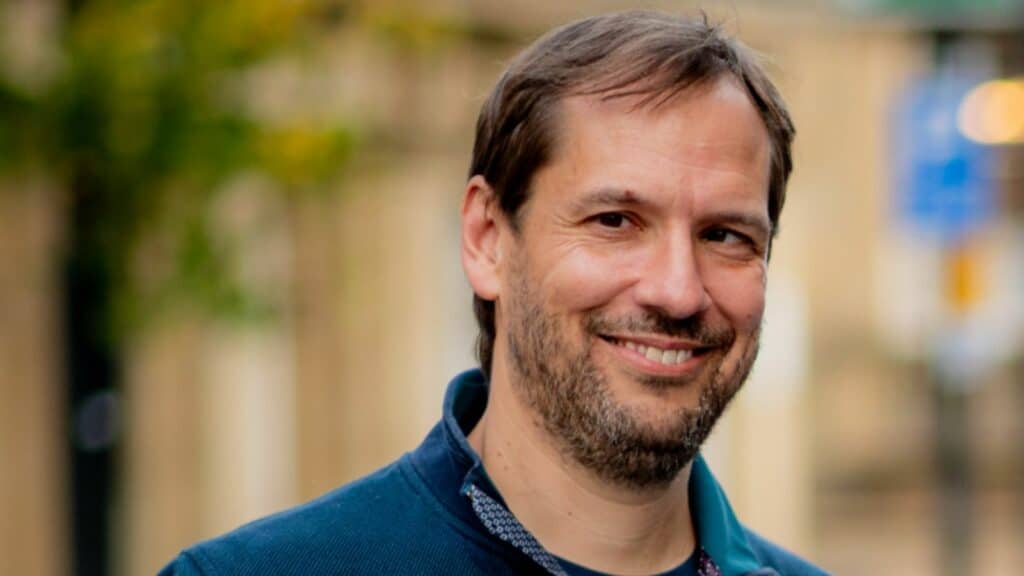
“During COVID, we took the opportunity to reset a vision for our organisation. We wanted to become known as the North’s leading AWS software engineering business, and largely we have delivered that vision by going through really high quality work and recommendations and referrals,” he explains.
“In the last six weeks or so, we’ve also reset our vision now for the next three years, and that is to become one of the UK’s leading digital product engineering businesses, we’ve changed the geography, so it’s a UK focus now, rather than a Northern focus.”
Beyond Sage: a new generation of success stories
Sage might still be the region’s “poster child” for tech success, as Sarat Pediredla puts it, but it is no longer the only company shaping the North East’s growing tech reputation.
Jamie Cooke and Ben Ridgway, co-founders of proptech business iamproperty, met while studying at Northumbria University before launching their business in Newcastle in 2009 with a mission to transform the ‘broken’ homebuying process. Today, the business employs more than 750 people.
“We both came to the North East for university and never left. We love it here, and when we launched the business, it was the obvious place to set up,” says Cooke.

“People in this region are hardworking and unbelievably supportive, and in the early days of the business, it was people from the North East who were right there with us figuring it all out. We genuinely wouldn’t be the business we are today without having had them on the journey, and a lot of them are still on it with us.”
Similarly, Lee Rorison, founder and CEO of data solutions firm Seriös Group, believes one of the North East’s biggest strengths is its business community.
“What stands out more is how open the business network is. Founders, operators and investors are willing to share experience and actively support one another, which makes a real difference when you’re building a business.
“That’s what makes the tech industry in the North East different. It’s genuinely collaborative, with people who want to see others succeed. That environment is one of the reasons we built Seriös Group here. And it’s why we will continue to invest in the region.”
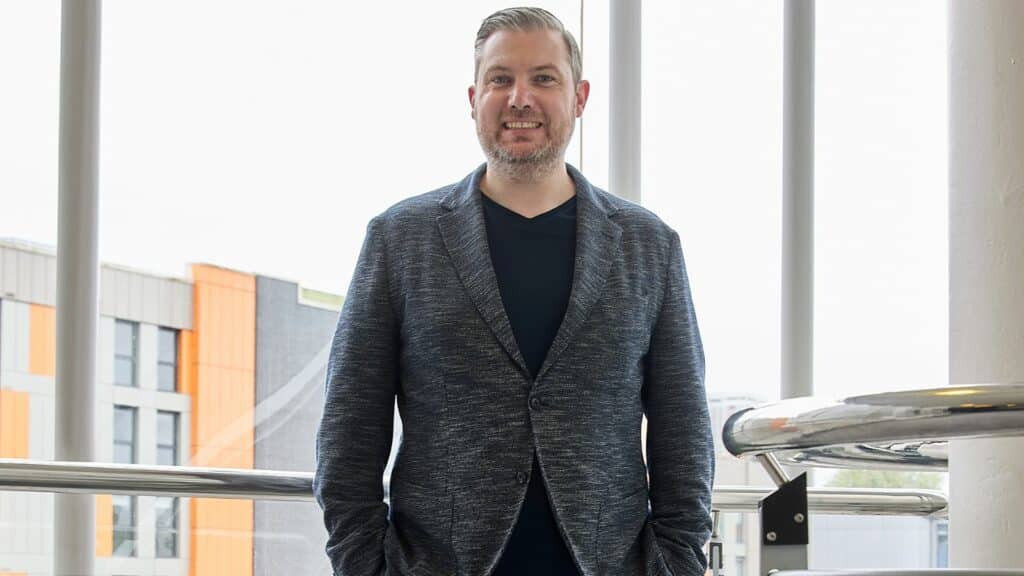
Al Alzein, general manager at Dynamo North East, believes it’s what makes the region unique.
“When it comes to collaboration, there’s no closed door. Even with big time competitors, people are quite willing to work with each other, regardless if it’s a £50m turnover business or a small start-up.
“Everything that we do is not-for-profit, and the bread and butter of Dynamo originally is the Dynamites Awards. It’s very rare elsewhere that you’ve got an Accenture, CGI, a Capgemini, all in the same room, sitting next to each other.”
Alex Craig from Muckle LLP believes that collaboration is now becoming increasingly visible beyond the private sector too. With businesses, universities and the public sector now working more closely together, she says the region has become “much more joined up” in recent years.
“Particularly with the North East Mayoral Strategic Authority, there is a lot more focus on trying to get that broader voice in saying ‘we want to do this, we’re really good at this, so this is what we need to do to support it’ rather than focusing specifically on one area, organisation or project,” she explains.
UNW has seen that shift too. “People know each other, they’re willing to make introductions and there’s a genuine willingness to help businesses succeed.”
“Nobody thinks of Greggs as a tech company”
The ecosystem has changed in another important way too. Increasingly, organisations that wouldn’t traditionally describe themselves as tech businesses are now becoming significant tech employers in the region.
“We had a very open conversation with Greggs, as they said they’ve realised they’ve turned into a tech company because they have over 130 people in their tech team,” explains David Dunn, CEO of Sunderland Software City and Dynamo North East.
“They are looking to hire, but nobody thinks of Greggs as a tech company, and they wanted to join for awareness and connect to other people.”
The same applies to other major businesses dotted across the region from Hays Travel, Barbour and Newcastle Building Society, alongside public sector organisations such as HMRC, the NHS and the Infected Blood Compensation Authority, now home to more than 600 staff in Newcastle.
“They all play a massive part in our tech community, but nobody calls them tech.”
For Dunn, that’s one of the clearest signs of how the ecosystem has matured.
The five universities in the region are also beginning to play a bigger role in the tech ecosystem beyond pumping out graduates as well, thanks to new initiatives such as the £22.5m North East Spinout Inspire Fund, designed to accelerate high-growth businesses emerging from research.
UNW believes there is “still more to do” to create a more joined-up spinout ecosystem, but this remains one of the region’s “biggest opportunities”.
“Other parts of the UK, particularly Oxford and Cambridge, have built very sophisticated ecosystems around supporting technology spinouts as they grow. The North East is moving in the right direction, but there is still more to do to bring together investors, advisers, mentors and support organisations, making it easier for founders to access the right support as they scale.”
The next challenge
For all the infectious optimism surrounding the North East’s progress so far, nobody I spoke to suggested its tech ecosystem had ‘arrived’ and that the job was done and dusted. Far from it.
The question is no longer whether the region can build successful technology businesses, as attention is now turning to how it can create more of them to effectively feed the ecosystem.
While UNW points to “far more investors” now operating in the region giving ambitious businesses more options for funding, as well as better support networks, even with some of those improvements, several leaders believe the region’s next challenge begins much earlier.
Jamie Hardesty over at Sunderland Software City is pretty vocal about how the national conversation around scale-ups risks overlooking a more fundamental issue in the region.
“We absolutely have examples of company growth. But while the government and London tech talk about the scale-up challenge, we should have more successful tech scale-ups in the North East but because we don’t have a huge swelling pipeline of start-ups, we have a start-up problem,” he explains.
“Then we need to make sure that those businesses, those high potential founders, are accessing the right support that they need, be that the right programmes or insights or access to markets, based on the business model that they have. And then I think we can tackle our scale up problem.”
The opportunity now is to “demystify and encourage” more people to launch tech businesses in the first place. But he argues there are structural reasons why the North East still produces fewer founders than some other regions.
“We do not have a lot of people in this part of the world, and we don’t have a huge legacy of wealth,” he explains.
“The North East has a small population relative to other UK regions, but when we look at what comes out percentage wise we do figure very low for start-up density, for business births, for seed investment. If you’re struggling on those key metrics, you’re inevitably going to struggle on the scaling metrics as well.”
David Dunn agrees that building a stronger pipeline of founders should now be a priority.
“Whilst North East figures are looking reasonably healthy for tech start-ups, it’s still nowhere near where we need to be. If the central government approaches are that we need to back scale-ups, we need to make sure we’ve got a pipeline, and to get a pipeline, we need more start-ups, so that’s where I think we need to focus.”
So how can more of the region turn more of its talent into its next tech success stories, and what happens once those founders begin to grow their businesses?
That’s the question we’ll be diving into for the next piece in Prolific North’s GRAFT Regional Champions Tech series.
You can sign up for our weekly tech newsletter here to keep up-to-date with all the latest Graft Regional Tech Champions pieces and Northern tech news.