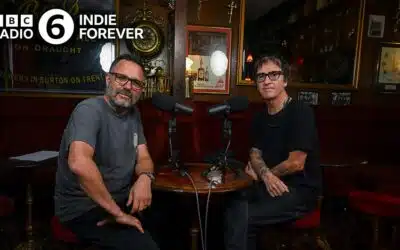


Award-winning novelist, playwright and performer Kate Mosse CBE FRSL, has addressed the Labour Party Conference in Liverpool, commenting on the risk posed to the creative industries by AI, and the need to address sexism within the school curriculum.
Speaking in a fireside chat with broadcaster Nihal Arthanayake at an event hosted by Creative UK, Mosse used her time on stage to address the “deliberately manufactured” debate around AI, flagging that her new book, Feminist History for Every Day of the Year, was on AI trainer LibGen and “had been scraped before I even had a copy in my hand.”
The author of 2005 bestseller Labyrinth and founder of the Women’s Prize for Fiction discussed the economic case for protecting copyright, and flagged that an impact study has not yet been delivered.
“When I asked a government minister if they had done an economic impact study about the benefits of signing these deals – basically not supporting UK copyright… versus what would be lost in terms of those of us who are paying… they hadn’t done that.
“That now has been part of the conditions of the data usage bill that went through. Many people who are in the House of Lords said that they have never had so much lobbying and so many letters and emails and meetings as they did about the data bill, because everybody else understands that the UK creative industries are a world superpower. To not protect copyright at the heart of it is foolish, and in the end, is theft.”
READ MORE: Planning approval granted for £100m Stockton AI data centre
Mosse continued: “It’s not about AI not mattering. It does. It’s here to stay. It’s incredibly important. The opportunities are huge. We need to regulate it though, rather than the Wild West.”
“We’re sitting in this context and we’re here at the Labour Party conference. The creative industries are worth something in the region £125bn per year. We live here, we pay our taxes. We are the soft power. In an article in this week’s economist, it says that one of the three most important, soft powers of the UK is the English language. And if we do not protect the people who are producing the original work, it will just be diluted and diluted.
“There will be very few people who are producing original work. And in the end, we will have killed an industry that is incredibly important to the economy of this country.
She also tackled the ‘opt out’ proposition – which would see creatives ‘opt out’ of their work being used by AI scraping firms.
“The opt out means that writers, musicians, artists, whoever, rather than doing their work, which creates growth and brings income into the UK, are spending their time going around all of the many, many, many generative AI companies trying to say to them, please don’t steal my work. It is an absurdity.
“I mean, they are £1tn pound businesses – some of them, not all of them, obviously. A lot of them are not. But the biggest ones are. It’s David and Goliath.”
Her discussion also touched on a recent report from Sexism in Schools about history at Key Stage three – flagging a worrying absence of women’s history in the curriculum.
“It’s really shocking that only 12% of lessons mention women at all and 59% of lessons mention no women ever at in any way,” Mosse said.
Commenting on her new book, she added: “I partly wrote this book for teachers and librarians who kept saying, we need to give a better 360 view of history for girls and boys.”
“Once you see absence, you can’t unsee it. That’s the thing. So I remember having these conversations about why women weren’t there. And of course, you know, the answer was very straightforward from teachers – which was, well, it’s not in the curriculum. The thing that is demoralizing for feminists and an activist of my age is that they are still not there in the curriculum.”
Addressing her presence at the party conference, Mosse said it is to address key issues like these: “I’m here talking about AI and the curriculum because it matters, she explained. “We can’t just sit passively. We have to do things. It’s not what I expected to be doing in [my] 60s, frankly. But here we find ourselves.”
The Cultural and Creative Industries Pavilion continues throughout today (September 29) and Tuesday, with further sessions featuring Armando Iannucci, Carol Vorderman, Joe Dempsie and more. conference.wearecreative.uk. A live stream of the pavilion is available here, including broadcaster and campaigner Carol Vorderman and founder of The Nerve Carole Cadwalladr’s highly anticipated fireside chat at 2.30pm today. Mosse’s full session can be seen below.