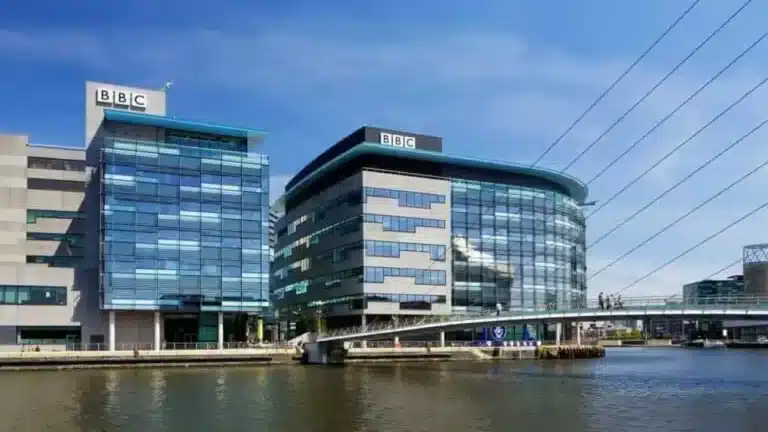

The House of Lords Communications and Digital Committee has written to the Culture Secretary to urge a “bold, confident and unapologetic” approach to the future of the BBC.
Ahead of the publication of the Government White Paper, the Committee says that this is no “routine” Charter review and that it must focus on “equipping the BBC to navigate dramatic changes to how public service media is distributed, discovered and consumed.”
Baroness Keeley, the Chair of the Communications and Digital Committee highlights the significant financial pressures the corporation is already under – as it seeks to save £500m over the next 2-3 years.
Her committee said that any expanded or new responsibilities added in the next Charter needed to be matched by adequate funding, or a clear acknowledgement that the BBC will have to do less in other areas.
The letter to Lisa Nandy follows evidence heard by the committee, which found that there was “no obvious benefit in proposals for the new Charter to include a broad new public purpose to drive economic growth across the UK.”
Instead, it says that the Charter should “retain the spirit of the BBC’s current fourth purpose, which puts public value first, while articulating more clearly the BBC’s vital contribution to developing the UK creative economy.”
Baroness Keeley was MP for Worsley and Eccles South from 2006 until 2024, when she became a member of the House of Lords.
“The upcoming BBC Charter Review is fundamental for the future of public service media in the UK. It comes as national public broadcasters face ever greater competition for viewers from streaming platforms and international technology giants, and so cannot be designed in isolation from the Government’s wider digital and media policy,” she said.
“The Government should use the BBC Charter Review White Paper to set out a coherent and ambitious strategy for public service media over the next decade. It must also be realistic about what can be asked of the BBC as it grapples with significant financial pressures.
“We can see no obvious benefit in a specific requirement for the BBC to drive economic growth across the UK. It already makes a massive contribution to the UK’s creative economy. Including an explicit economic growth public purpose in the new Charter risks both mission drift and skewing commissioning towards more generic, more exportable content.”
In 2015, broadcast television reached 92% of people in the UK each week, compared to just 54% last year.
The Committee said that it recognised that the BBC will increasingly need to turn to third-party platforms, including YouTube, however, “this comes at the expense of control over how content is presented, access to audience data and the BBC’s direct relationship with audiences.”
It said that the new Charter should support both BBC-owned services and flexible third-party distribution – “simply making content available on a platform does not guarantee that audiences will find it, and evidence to the Committee highlighted the need for stronger safeguards on prominence, data access, platform accountability and fair value.”
Adding that the voluntary agreements alone would not provide “a consistent and sustainable solution” and that the Government should set “clear minimum expectations for agreements between public service media providers and video-sharing platforms, backed by new legislation if voluntary agreements prove insufficient.”