
Reach plc’s revenues are down 9% YoY as the UK’s largest regional publisher reported revenue of £232.9 million for the six months ended 30 June 2026.
Both print and digital were affected by the slump. Print revenue fell 8.3%, with higher cover prices offsetting growing interest due to the World Cup and overall lower newspaper circulation, although advertising and circulation income proved more resilient than physical sales.
Digital revenue dropped 11.4%, largely due to reduced referral traffic from Google, which contributed to a 40% fall in on-platform page views.
Despite the lower revenue base, adjusted operating profit slipped only modestly to £43 million, or around 4%, while the adjusted operating margin improved to 18.5%. The performance was supported by a 10.3% reduction in operating costs following restructuring initiatives including redundancies, and the continued rationalisation of the company’s print production network.
On a statutory basis, Reach recorded an operating loss of £43.5 million, reflecting non-cash impairment charges associated with print site closures, the amortisation of publishing rights and newspaper titles, and restructuring costs.
The publisher generated adjusted operating cash flow of £48.8 million during the period, while net debt declined to £47.5 million.
Reach also reported an improvement in its defined benefit pension scheme, which moved into a small IAS 19 surplus. Deficit reduction payments are expected to reduce over the coming years before ending in 2028, providing additional flexibility for future capital allocation.
The company has reset its dividend policy, reducing the interim dividend by around half to 1.44 pence per share in order to “direct more capital towards investment in digital products, subscriptions and video content.”
Management said the strategy is designed to reduce reliance on increasingly unreliable referral traffic from search engines by increasing direct audience engagement and expanding higher-value digital revenue streams. The group said it is also exploring the use of artificial intelligence tools and potential AI licensing opportunities to support long-term revenue diversification while maintaining disciplined cost control.
Chief executive Piers North said the company was on track to meet expectations, despite the declining revenue: “We are on track to deliver on market expectations for the year and remain confident in our ability to navigate uncertainty.
“We will maintain financial discipline and strategic focus through this period, until our pension deficit payments are due to end in 2028.
“Guided by our strategic priorities, we are building a stronger business by investing in digital subscriptions and video, securing greater independence from referral traffic.
“Our future will be less about volume and more about original content, distinctive brands and securing better returns.”
Not everyone shared North’s optimism about just about maintaining profits despite declining revenues and readership, however. Duncan Ferris, an analyst at investment platform Freetrade told Prolific North: “Reach is a business in a very strange position, cutting costs to keep profits afloat as readers bail out at a frightening pace.
“Its revenue deterioration has accelerated, with digital headaches only worsening as declining Google referrals caused web traffic to tumble and dealt a heavy blow to programmatic advertising.
“A digital pivot to subscriber models aims to reduce reliance on Google, and there is early progress here, with over 40,000 paid subscribers secured. More launches are anticipated in H2, but whether this can actually patch up the hole in revenue remains to be seen.
“Things look little better on the print side of the business, even as the World Cup provided a driver for both content and ad revenue. Higher cover prices look to have torn into circulation volume, and the print business doesn’t look like a major part of Reach’s growth strategy.
“Extensive cost-cutting did shield company profits from much of the impact, but operating profits still slipped. Measures to control costs have been aggressive, with Reach shuttering print operations in Watford and Glasgow.
“The central issue is failing revenue across both parts of its business. Neither print nor digital currently look up to delivering growth. Reach can cut costs to preserve profit, but there’s only a limited amount it can do here before it runs out of road.
“For shareholders, a halving of their interim dividend may make this hit home, as they face leaner returns while Reach tests its less Google-dependent business.”
Shares were down 23% at Reach as the results dropped this morning, for a total 39% drop in a year and around 86% in five years.
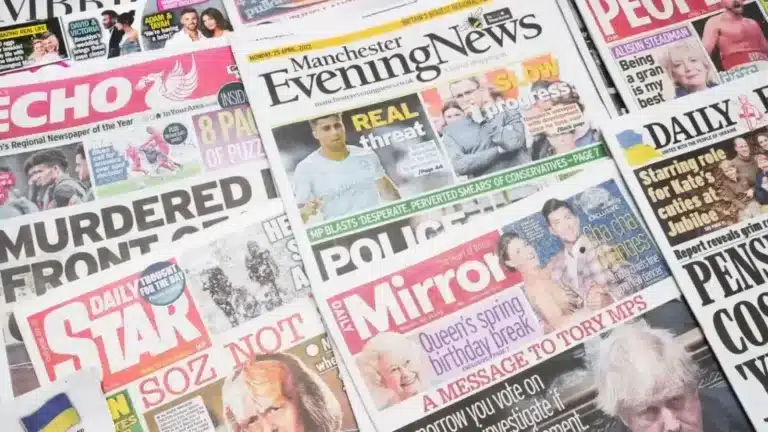
Reach plc is the largest commercial news publisher in the UK and Ireland, operating around 120 national, regional and digital media brands, including Manchester Evening News and Liverpool Echo as well as nationals the Mirror, Express, Daily Record and Daily Star.